The love story of Cosimo and Eleonora
The relationship between Cosimo I de' Medici and Eleonora di Toledo is a great story of mutual love.
Cosimo is a very important figure in the Medici family. He takes office after the Republic and becomes the first Duke and the first Grand Duke of Tuscany. Eleonora di Toledo is no less important. The daughter of Don Pedro, Viceroy of Naples, she meets Cosimo in Naples, and he wastes no time in asking for her hand in marriage.
Although she is of aristocratic blood and he is a descendant without royal blood, the power of the Medici family and their strong alliances convince the great families to support this union.
When Eleanor arrived in Florence, she was welcomed by Maria Salviati, her mother-in-law, at the Medici Riccardi Palace, which was then the family residence. Although beautiful, Eleanor felt that the palace was not worthy of the new Duchy of Tuscany, so she urged her husband to find a more suitable residence for their title: this would be the Palazzo della Signoria.
Cosimo calls upon his trusted architect Vasari, tasking him with adapting it to their needs, and so the newlyweds move into the new Ducal Palace, where Eleonora has her apartments.
What, then, is Eleonora if not the first Florentine first lady? Already well-educated from birth, as Cosimo's wife she follows everything: she has her own listening rooms to advise her husband after his meetings, she eats at the table with him, she rides horses, and she educates her daughters as well as her sons. A progressive mindset
Eleonora did not like the medieval Palazzo della Signoria and considered the Palazzo Pitti, located on the other side of the Arno, a more suitable residence for the whole family.
She purchased it with her dowry, thus becoming the owner of Palazzo Pitti and the Boboli Gardens. The transfer of the ducal family to the “new” residence meant that the Palazzo in Piazza Signoria became “old”, while Cosimo needed to call on the good Vasari and ask him to build a corridor connecting, so to speak, “home and work”, or rather Palazzo Vecchio with Palazzo Pitti: this is how the Vasari Corridor came into being.
Cosimo and Eleonora had eleven children, and she died in 1562, at the age of only forty, from tuberculosis. An interesting fact: the 16th-century funeral clothes of Cosimo I de' Medici and Eleonora di Toledo are on display in the Museum of Fashion and Costume in Palazzo Pitti.
Gallerie degli Uffizi
Los lugares
Etapas
Palazzo Vecchio - Monumental Rooms
Palazzo Vecchio is the city's symbolic monument and, for over seven centuries, the seat of its government; it bears extraordinary testimony to all the salient phases of Florence's history and art. It overlooks, with its imposing bulk, Piazza della Signoria.
The Monumental Quarters form the heart of the museum itinerary and include a series of rooms, starting with the grand Salone dei Cinquecento (with a decoration that celebrates Florence, and in particular the Medici dynasty following the advent of Grand Duke Cosimo I), overlooked by the precious Studiolo di Francesco I.
A little further on is the Sala dei Duecento. On the upper floors one can admire: the Sala dei Gigli, the Sala dell'Udienza, as well as the so-called Quartieri Medicei (Eleonora di Toledo's Quarters and the Quartiere degli Elementi). Also of interest is the Sala del mappamondo (or the Sala del Guardaroba), with ancient geographical maps, and the Cancelleria, which was the office of Niccolò Machiavelli during the first Florentine Republic.
The decorations of the various rooms were made between the 15th and 16th centuries by important artists, including Ghirlandaio, Bronzino, Vasari and his assistans.
Along the museum itinerary are some masterpieces of Renaissance sculpture: Michelangelo's Genius of Victory (Salone dei Cinquecento), Donatello's bronze group of Judith and Holofernes in the Sala dei Gigli, Verrocchio's Puttino (the one in Michelozzo's courtyard, the main entrance to the Palazzo, is a copy).
Another museum tour of Palazzo Vecchio include the Arnolfo Tower, with breathtaking views from the top.
All children who come to Florence should be taken to Palazzo Vecchio. The Mus.e Association organises daily activities for families with children of different age groups, from 4 years upwards, by reservation only. For a fun visit on your own, it is possible to rent a Family Kit (recommended for children from 6 years of age) with a map and other useful items for a visit to the Palazzo or the historical centre under the banner of knowledge, wonder and sharing.

Piazza Pitti
Piazza de' Pitti, almost completely dominated by the imposing ashlar facade of Palazzo Pitti, is one of the most beautiful squares, recently pedestrianized, in the Oltrarno. The Pitti complex, in addition to the Boboli Gardens, includes 5 museums: the Palatine Gallery, the Gallery of Modern Art, the Treasury of the Grand Dukes, the Museum of Fashion and Costume, the Porcelain Museum.
Built in a secondary area of the city, on the slopes of the Boboli hill, the palace was commissioned by the banker Lucca Pitti (1457); it was then expanded, about a century later, when it was bought by the Medici, becoming the family's most prestigious residence. In 1620 Giulio Parigi enlarged the façade, while in the eighteenth century, the Lorraine family built the two lateral wings that delimit today's slightly uphill square, to further underline the majesty of the complex.
In the square, in addition to Palazzo Pitti, there are other important buildings, including Palazzo Guicciardini and Palazzo Temple Leader. In the square some plaques mark the houses where illustrious people lived: at no. 18 is the home of Paolo dal Pozzo Toscanelli (the astronomer who inspired Christopher Columbus), while at no. 2 the house where Fyodor Dostoevskij worked on his masterpiece, The Idiot. In the immediate vicinity of Piazza Pitti is Casa Guidi, the house-museum where the English poet Elizabeth Barrett Browning lived.

Museum of Costume and Fashion - Pitti Palace
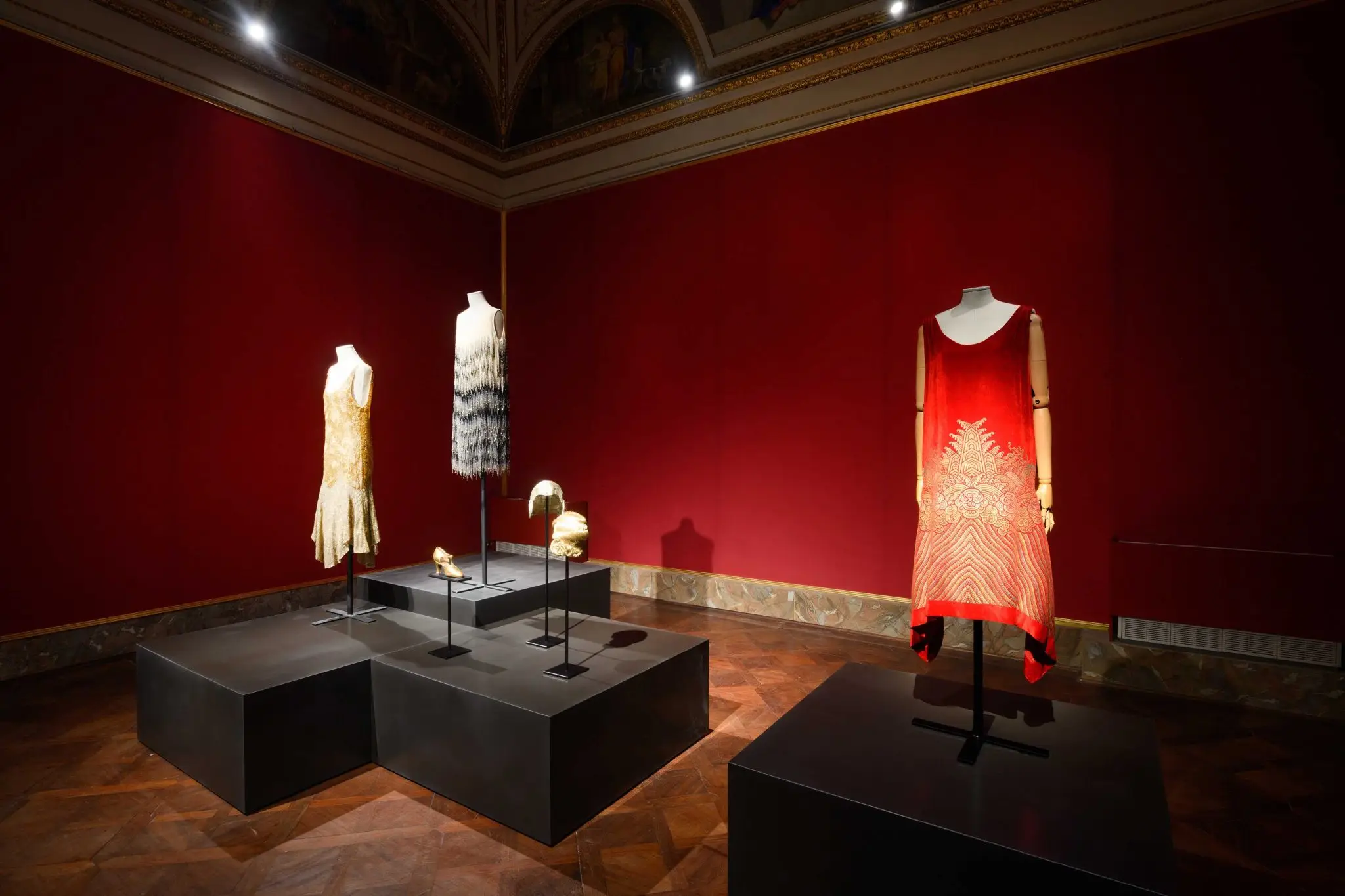
The Museum of Costume and Fashion in Florence, located inside the Palazzina della Meridiana next to the southern wing of Pitti Palace, is one of the most important Italian institutions dedicated to the history of costume and fashion.
It houses a vast collection of more than 15.000 pieces, with dresses, accessories and historical costumes dating from the 16th century to present days. The recently-renovated museum features 12 new rooms, including the elegant 19th century Ballroom.
Among the numerous exhibitions are the majestic kimono-style housecoat created by Mariano Fortuny for Eleonora Duse, the 1920s “flapper” tunic by Chanel, the sparkling sequin-covered outfit worn by Franca Florio and the flamboyant evening gowns by Elsa Schiaparelli, leading up to the regal luxury of the creations by Emilio Schubert, the tailor of the divas in the 1950s (his garments for Gina Lollobrigida and Sophia Loren are famous).
Additionally, the museum showcases the geometric extravagance of Patty Pravo's dress, designed in the early 1980s by Gianni Versace, the essential sensuality of the black sheath designed by Jean Paul Gaultier and made famous by Madonna, and the dreamy allure of Gianfranco Ferré's collection for Dior in the 1990s.
Each section offers a fascinating journey through the centuries, showcasing masterpieces by great fashion designers that reveal the evolution of style and taste. Displayed in rotation for conservation reasons, the Museum’s collections also include jewelry and accessories from the 18th century to today,
Medici Riccardi Palace
From Monday, January 12, the palace entrance and exit will be temporarily relocated to via Ginori no. 2, to allow the completion of the restoration works.
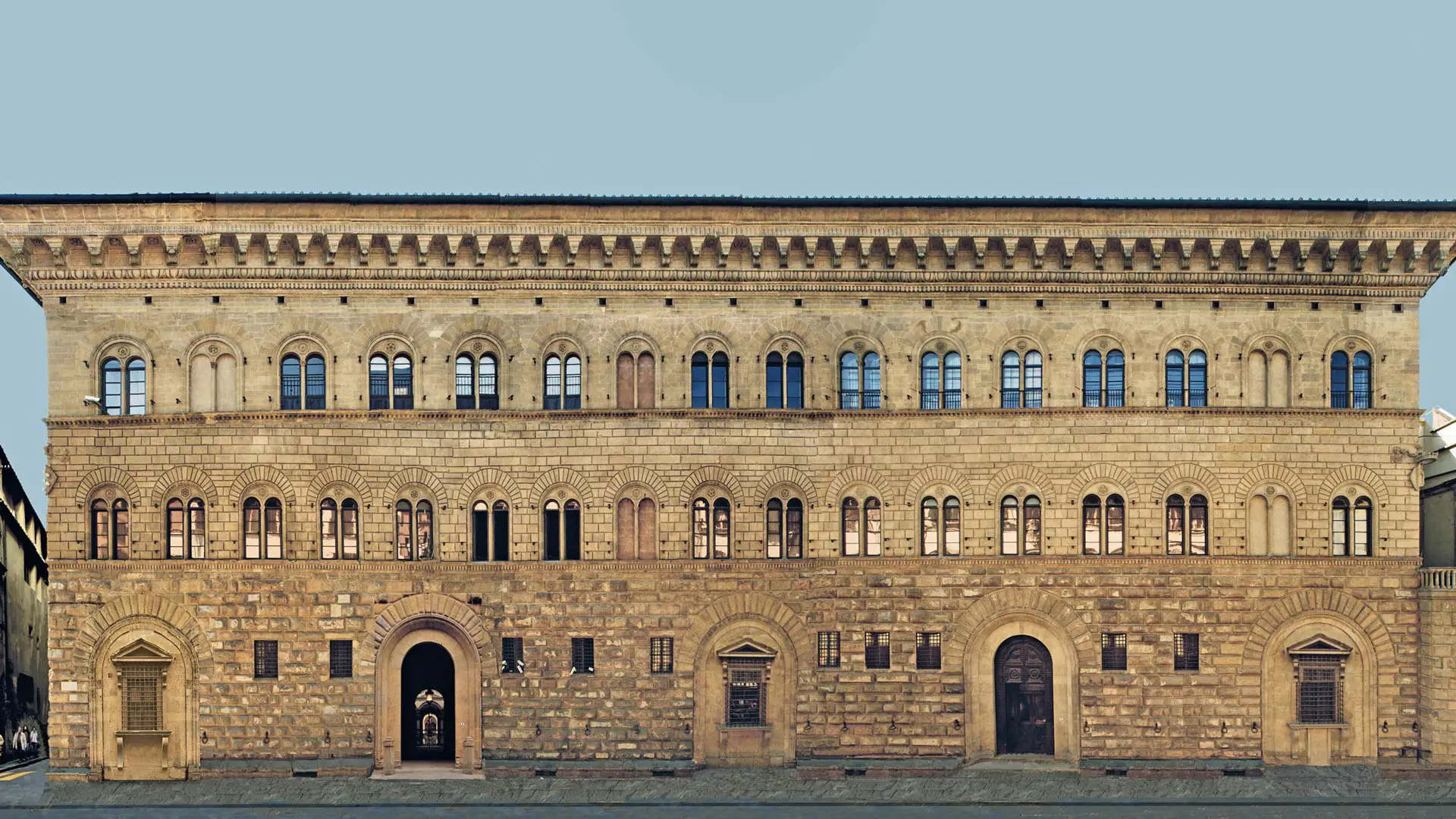
Palazzo Medici Riccardi plays a fundamental role in the history of the city of Florence.
Commissioned in 1444 by Cosimo il Vecchio, it was the residence of the Medici family on what used to be known as Via Larga (today Via Cavour) and is a fundamental model of Renaissance civil architecture. In addition to being the private residence of the Medici family, with personalities of the calibre of Lorenzo the Magnificent, the palace fulfilled a public function and welcomed prominent political figures.
The palace's monumental courtyard leads to the Chapel of the Magi, which was built to a design by Michelozzo and frescoed in 1459 by Benozzo Gozzoli with the famous Cavalcade of the Magi, a masterpiece of the early Renaissance characterised by a series of portraits of illustrious figures. On the altar is a copy of the original altarpiece painted by Filippo Lippi.
Purchased in the mid 17th century by the Riccardi, it has many rooms dating back to this period, such as the sumptuous Galleria degli Specchi, in whose vault, magnificently frescoed by Luca Giordano, the Apotheosis of the Medici Family, protectors of the Riccardi, is depicted. In the basement are exhibited the busts from the Roman era collected in the 16th and 17th centuries by the Riccardi family, as well as the archaeological itinerary rich in evidence from the Roman era to the Middle Ages.
The museum organises activities and workshops for families according to the age of the children and activities for schools.
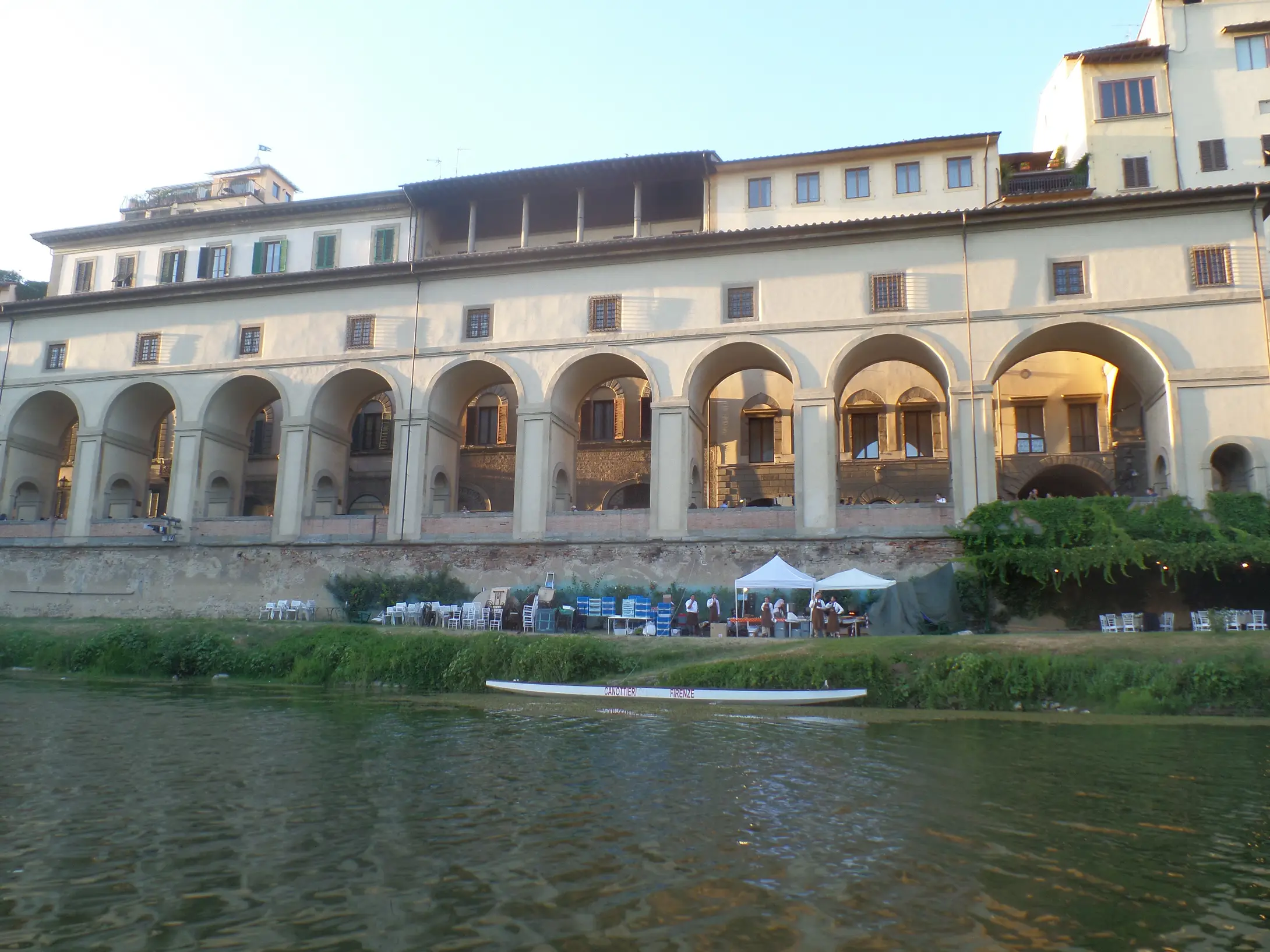
The Vasari Corridor
The Vasari Corridor ("Corridoio vasariano") was built by the celebrated architect Giorgio Vasari in just five months during 1565 to enable the Grand Dukes to move freely – and safely – from the seat of government Palazzo Vecchio to their residence in Palazzo Pitti.
On 21 December 2024 the Vasari Corridor of the Uffizi reopens. It has been closed since 2016 to allow for the necessary adaptation to the latest safety regulations.Visitors, starting from a special entrance on the first floor from the Uffizi, will walk over the Ponte Vecchio, so as to reach, across the Arno, the Boboli Gardens and Pitti Palace.
Restored today to its original bareness, it shows itself to the visitor as a simple ‘air tunnel’, more than seven hundred metres long over the heart of the city, exactly as it appeared at the time when the lords of Florence used to walk through it to reach Palazzo Vecchio, undisturbed and safe, from their residence in Pitti Palace, in a very short time.
The Corridor was created to guarantee a safe and fast connection between the two palaces for Grand Duke Cosimo I; to realise it, important interventions were made on the urban structure, for example transferring the meat market that took place on the Ponte Vecchio elsewhere, to avoid unpleasant odours; the goldsmiths' shops, still present today, were moved in its place.
Some houses were expropriated, even an internal passageway was created above the façade of the church of Santa Felicita, so that the grand ducal family could attend services unseen, thanks to a balcony protected by a grille inside the church.
From the windows of the Corridor, which are clearly visible along the route and also above the Ponte Vecchio, one enjoys unprecedented views of the city.
How to visit the Vasari Corridor
The Vasari Corridor can be accessed by purchasing the Uffizi Gallery ticket with an extra charge of €43. Reservation is required €4. With the combo ticket visitors can enter the Uffizi two hours before the scheduled Vasariano tour, to visit the museum.
The Vasariano will be open from Tuesday to Sunday, at the time booked, one group at a time, for a maximum of 25 people (plus two staff members), from room D19 on the first floor of the gallery. Last admittance at 4.35 pm.
The Corridor can only be visited from the Uffizi to Boboli Gardens: visitors will exit through the door next to the Grotta Buontalenti, to be accompanied to the exit from the courtyard of Pitti Palace. It will not be possible to book more than 5 tickets at a time, even for different dates. On the ticket there will be a link to the map with the route to reach the access gate to the Corridor.