Monumental Cemeteries
An unusual route, definitely out of the popular tourist destinations. Cemeteries invite us to silence - even if sometimes immersed in the city traffic – and worthy of being visited as authentic monuments of art, real open-air museums enriched by works of art dating back between the nineteenth and twentieth centuries. Places taking us back to the seasons of Romanticism and Neoclassicism, a source of inspiration for writers, painters and musicians.
It is worth a visit as these places communicates Florence's cultural liveliness, focusing on the personalities buried there and on the artistic and architectural beauty of the place. Many great artists, politicians and historians are buried in the Protestant “English Cemetery”: Elizabeth Barrett Browing and Giovan Pietro Vieusseux; "Agli Allori" cemetery: Frederik Stibbert, Sir Harold Acton, Roberto Longhi and Herbert Percy Horne, Oriana Fallaci and in the Catholic Cemetery "delle Porte Sante": Carlo Collodi, Giovanni Spadolini, Ottone Rosai. Names that will induce us to reflect on their biographies and the cultural heritage they left us.
The English Cemetery is located in Piazzale Donatello, along the ring road, a few steps from Piazza d'Azeglio, the cemetery “delle Porte Sante” is adjacent to the Basilica of San Miniato al Monte, while “Agli Allori” cemetery is in the Galluzzo district.
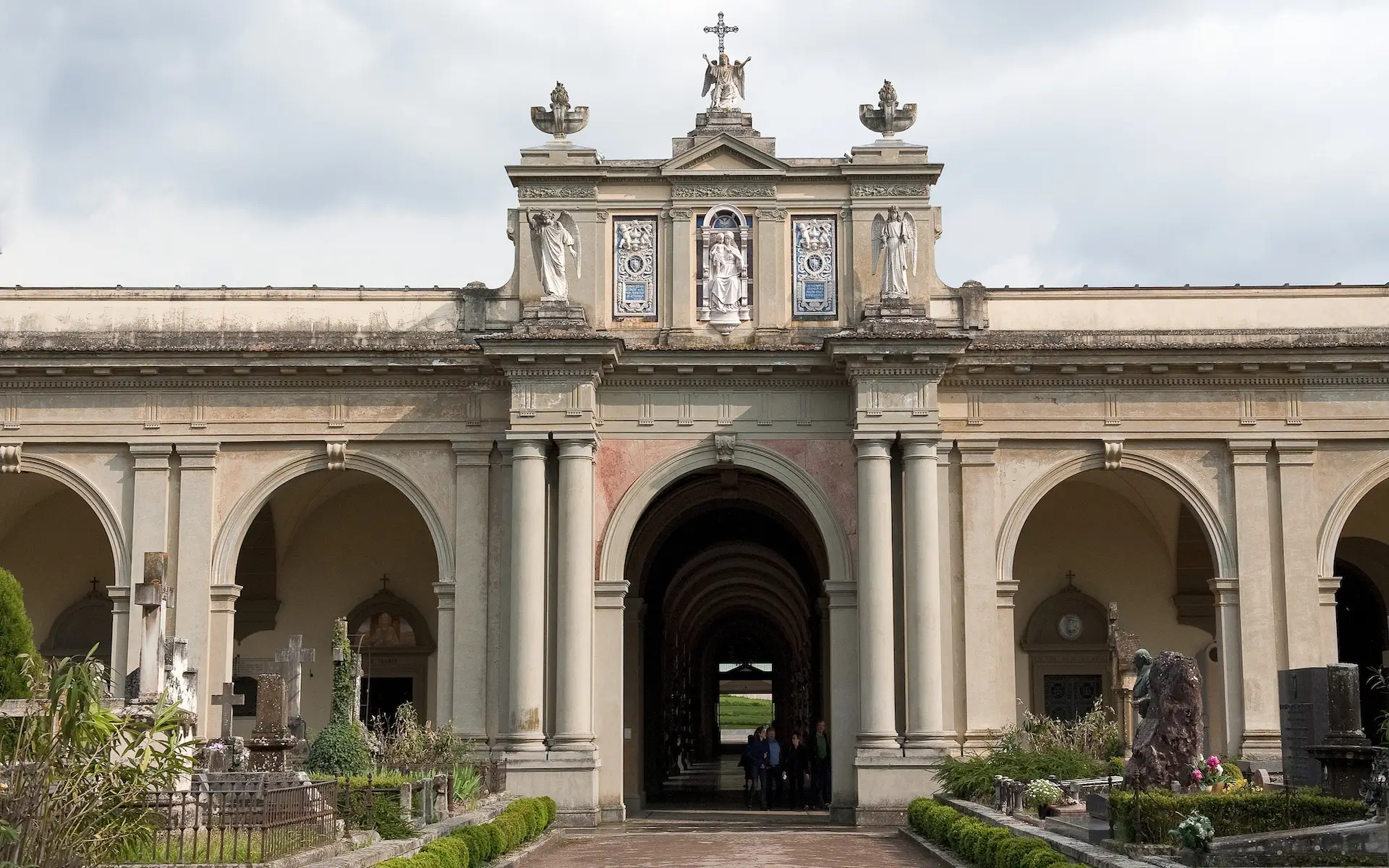
You can stretch out to the outskirts of Florence, to Antella to be precise, to visit another monumental cemetery of unexpected richness, which, among other things, has been extensively decorated by the most prolific artist of Italian Art Nouveau, Galileo Chini. The Monumental Cemetery of Misericordia dell'Antella is located in the municipality of Bagno a Ripoli.
Discover below the details.
Comune di Firenze
Useful information
The places
Stages
English Cemetery
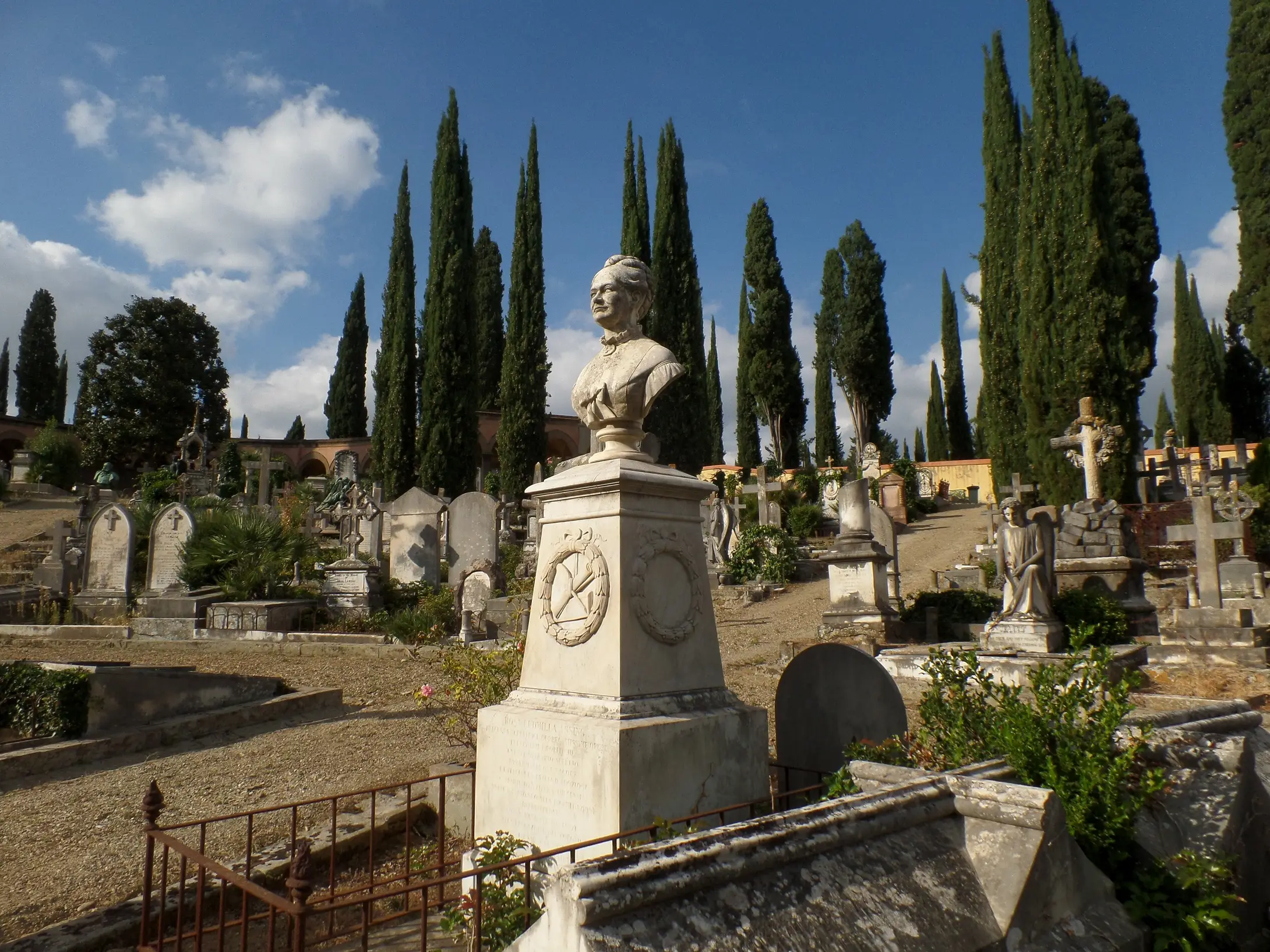
Situated on a mound in the middle of Piazzale Donatello, the Protestant cemetery was used between 1827 and 1877. The tombs are not arranged in orderly rows but in a rather Romantic fashion accentuated by the contours of the terrain. Philosophers, artists and writers, including Elizabeth Barrett Browning, are buried here.
The English Cemetery is one of the monumental cemeteries of Florence.
Evangelical Cemetery "Agli Allori"
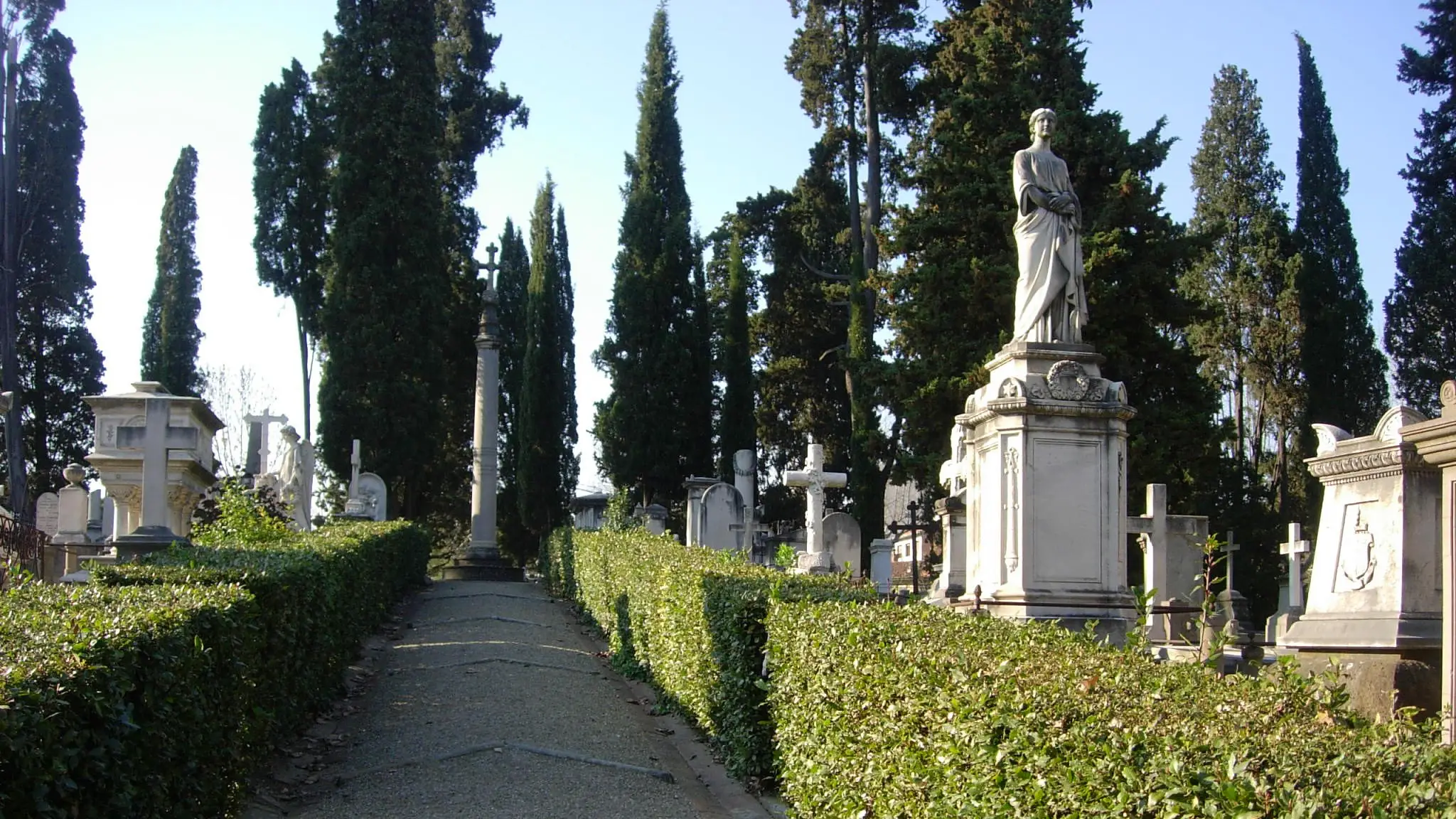
The Allori Cemetery is an extraordinary place where you have the opportunity to feel art and history.
Inaugurated in 1878, the Cemetery was created to give a proper burial to non-Catholics not welcomed by the city cemeteries. Since 1970 it has been open to all religions and lay people.
There are numerous characters who rest in this monumental cemetery, which can be considered a real open-air museum: from Frederick Stibbert, a well-known art collector, to the Italian writer Oriana Fallaci.
Cemetery of Porte Sante
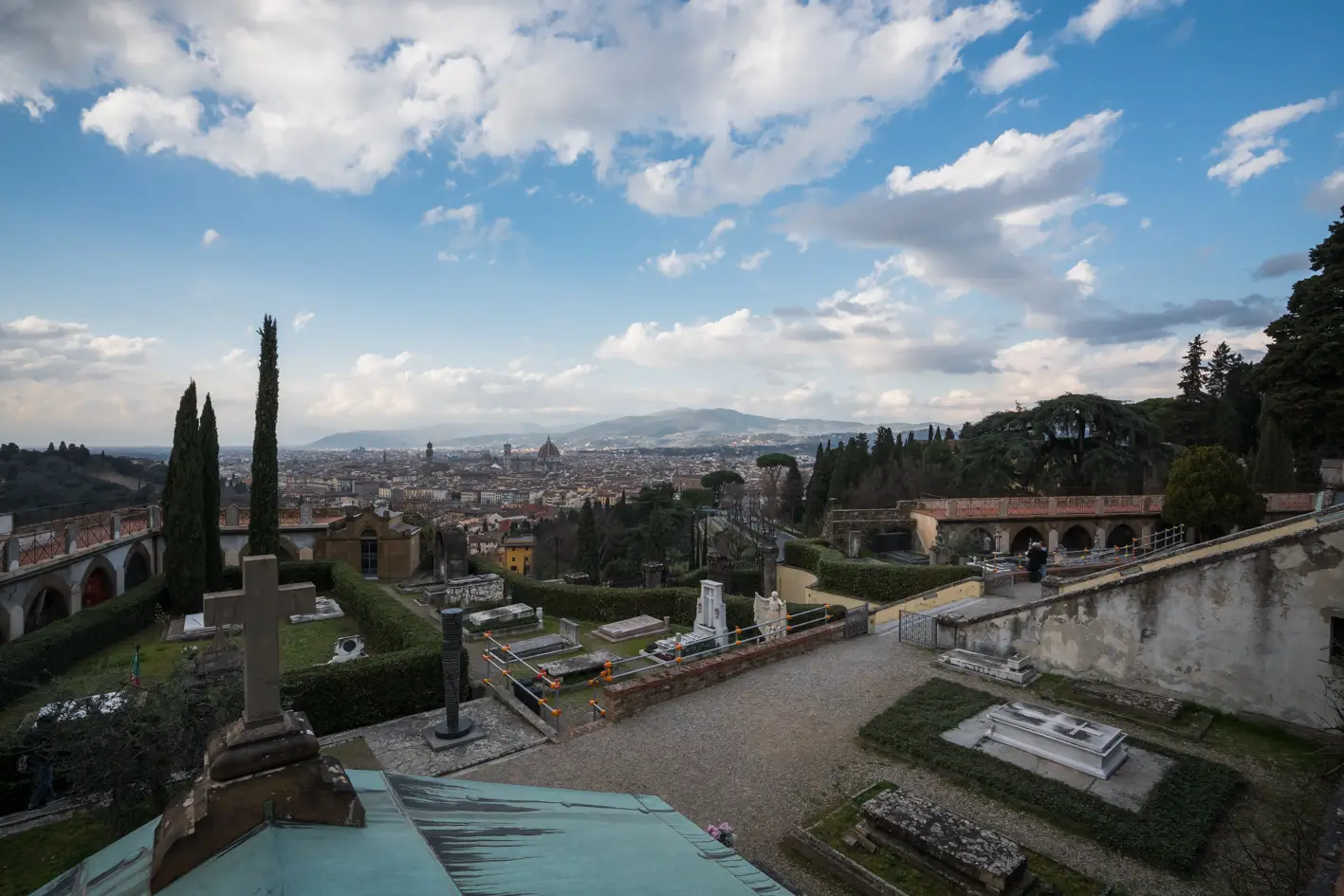
On the beautiful hill of San Miniato al Monte, at the foot of the Romanesque church is one of the most important monumental cemeteries in Florence, the Cimitero delle Porte sante.
You can see the tombs of many important Florentine personalities, including some well known writers (such as Carlo Collodi, the creator of "Pinocchio", painters like Ottone Rosai and Pietro Annigoni, the father of Italian cuisine, Pellegrino Artusi, fashion designer Enrico Coveri, and actor Paolo Poli are also buried here, along with director Franco Zeffirelli.
Many tombs have been designed or decorated by important artists (Galileo Chini, Libero Andreotti) to such an extent that over the years this cemetery has become a veritable open-air museum. Among the architecture and decorations, in fact, there is an authentic repertoire of styles: from the Byzantine revival style to the neo-Gothic/Renaissance Florentine tradition, from Neoclassicism to Art Nouveau. The most scenic part of the cemetery is below the façade of San Miniato, while the oldest section (with the 19th-century tombs) is at the back of the Basilica.
Monumental Cemetery of Antella
The Monumental Cemetery of Antella, a locality in the municipality of Bagno a Ripoli, is an extremely interesting place from an artistic point of view, due to its particular history and grandeur.
When Florence became the capital of Italy (1865- 1871) the local and Florentine nobility chose it as a burial place for their dead and had several chapels built and embellished by artists of the time.
Prominent among them is the figure of Galileo Chini, the outstanding representative of the Italian Art Nouveau style. Numerous stained glass windows as well as ceramics and vases come from the Chini factory in Borgo san Lorenzo.
Giacomo Roster and Adolfo Natalini, among others, worked on the subsequent extensions of the cemetery; poets and men of letters, architects, composers and musicians, politicians, art scholars, famous painters and sculptors rest in this cemetery.
We remind of the tomb of Jane Clairmont Clara Mary, writer, half sister of Mary Shelley and lover of Lord Byron.
The most important works include decorations by the Chini family, the Madonna on the portico by Amalia Duprè, and stained glass windows by Rodolfo Fanfani and Guido Polloni.