Ein Rundgang durch die Gedenkstätten
Der Nationale Verband der Gedenkstätten vereint die Häuser (heute Museumshäuser), in denen berühmte Persönlichkeiten aus allen Bereichen des Wissens, der Kunst, der Literatur, der Wissenschaft und der Geschichte gelebt haben.
Sie werden, soweit möglich, in ihrer Unversehrtheit bewahrt oder jedenfalls der Obhut von Wissenschaftlern und Experten anvertraut, die sich mit der jeweiligen Persönlichkeit und der mit ihr verbundenen Kunst auskennen. Es sind Orte, an denen man noch immer die Atmosphäre, die Gesten und die Begegnungen spüren kann. Orte, wo man Gegenstände, Bücher und Bilder bewundern kann, die bereits von dieser Persönlichkeit geliebt wurden.
Wann kann man sie besuchen
Ein paar Mal im Jahr, anlässlich des Nationalen und des Internationalen Tages der Gedenkstätten, bietet sich jedem die Gelegenheit, auf einem faszinierenden Rundgang die privatesten Räume von Künstlern, Musikern, Intellektuellen und Sammlern kennenzulernen. Viele dieser Orte sind Museen und haben daher feste, im Voraus festgelegte Öffnungszeiten..
Wo sind sie
Im Gebiet von Florenz und Umgebung gibt es zahlreiche Museumshäuser: Die meisten davon befinden sich direkt in der Stadt, in historischen Gebäuden oder schönen Villen auf den Hügeln, aber auch in den Kleinstädten und Dörfern der Umgebung. Jedes dieser Häuser ist ein lohnendes Ausflugsziel, um eine geschichtsträchtige Region zu entdecken.
Wir können Giovanni Spadolini, Galileo Galilei, Michelangelo Buonarroti, Elizabeth Barrett Browning, Enrico Caruso, Gino Bartali, Piero Bargellini, Sir Acton, Franco und Lidia Luciani oder Giovanni Michelucci „einen Besuch abstatten“
Folgen Sie nur unserer Route.
Ambito Firenze e Area Fiorentina
Die Orte
Etappen
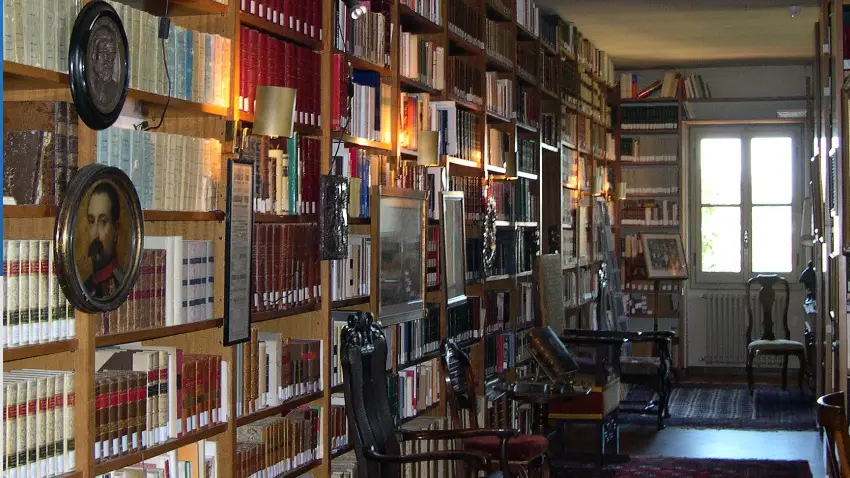
The Spadolini Nuova Antologia Foundation
The Spadolini Nuova Antologia Foundation, established by Giovanni Spadolini in 1980 by decree of the President of the Republic, Sandro Pertini, is based in Florence, on the hill of Pian dei Giullari, above Piazzale Michelangelo: in accordance with its statutes, it makes available to scholars the vast cultural heritage and library that the statesman bequeathed to it upon his death in 1994.
Better known as the “House of Books” or “The Circle of Cypresses”, the villa – built in the 1960s – overlooks Florence’s most famous monuments and houses a rich cultural heritage: a prestigious library containing antique volumes, collections of Napoleonic and Risorgimento memorabilia, as well as works by Tuscan artists such as Guido Spadolini, Ottone Rosai and Ardengo Soffici, alongside masters from the rest of Italy, such as Giorgio Morandi and Nino Caffé.
Casa Guidi
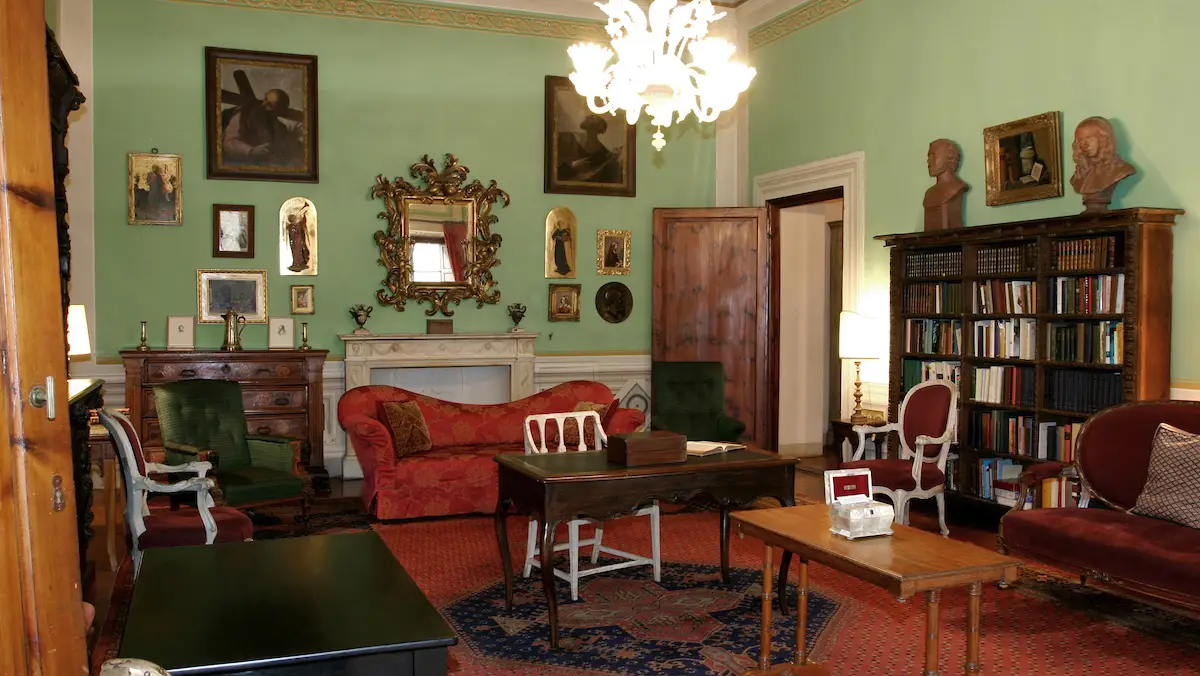
Robert Browning und Elizabeth Barrett zogen 1847 nach Florenz, als Elizabeth bereits eine etablierte Dichterin war: Sie blieben dort 14 Jahre lang bis zu ihrem Tod und schlossen Freundschaft mit vielen berühmten Italienern.
Elizabeth hatte sich den Namen "Casa Guidi" ausgedacht, um die Vorstellung eines Familienwohnsitzes zu vermitteln, und bis auf einige wertvolle Stücke wurden alle Gemälde und Möbel von Florentiner Gebrauchthändlern gekauft. Heute hat die Wohnung noch weitgehend das Aussehen der damaligen Zeit beibehalten.
Der Garten von Villa La Pietra
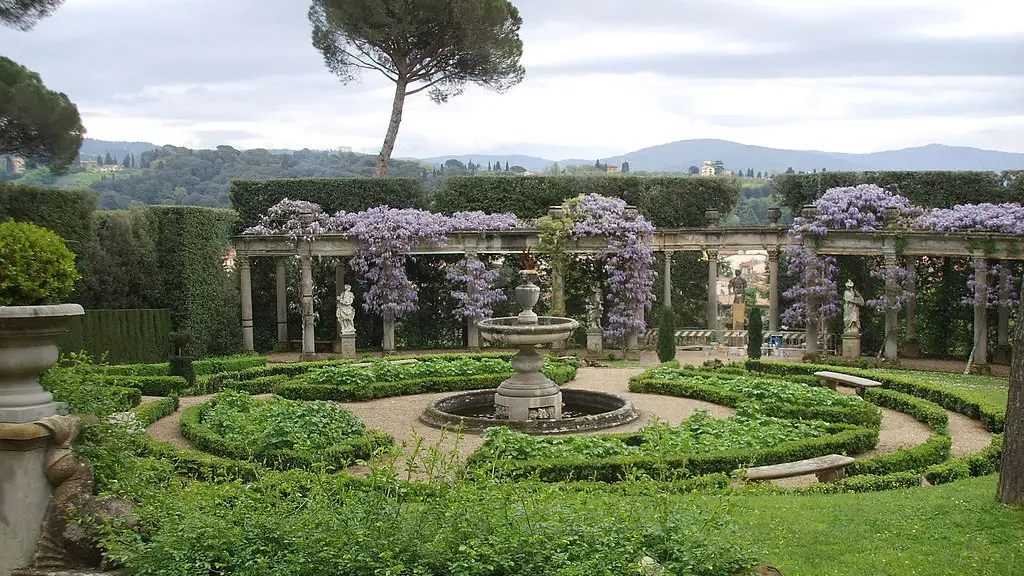
Der barocke Garten der Villa, der einst im Besitz der Familie Capponi war, wurde im 19. Jahrhundert in einen englischen Garten umgestaltet.
Der heutige Garten wurde ab 1904 auf Wunsch des Eigentümers Arthur Acton von den großen Gärtnern jener Zeit angelegt: Ambroziewicz, Bonaiuti, Castellucci, Dodge und Watson. Der Garten stellt die natürliche Fortsetzung der Villa dar und schafft eine nahtlose Verbindung zwischen Innen und Außen.
Das System ist terrassenförmig angelegt, wie es für den toskanischen Garten typisch ist, mit „Stanze di verzura“ (Grünzimmern), die der barocken Tradition entsprechen und in denen sich Architektur und Statuen venezianischer Herkunft befinden.
In dem Garten und in der Villa verbrachte Sir Harold Acton, Schriftsteller, Intellektueller und Ästhet, sein Leben.
Villa Pozzolini in Bivigliano
The building is named after the last owner, Luigi Pozzolini, who bought it in 1859 at an auction of properties of the Ginori family.
The construction of the villa dates back to the 16th century, possibly to a design by Bernardo Buontalenti; it is surrounded by a wonderful formal garden and by a 12-hectare park, formerly used as a hunting reserve.
Gesualda Malenchini Pozzolini, who was Luigi's wife, funded in her villa a rural school for the children of the peasants. It was the very first example of popular education in unitarian Italy
The villa is currently used as a location for events and weddings.
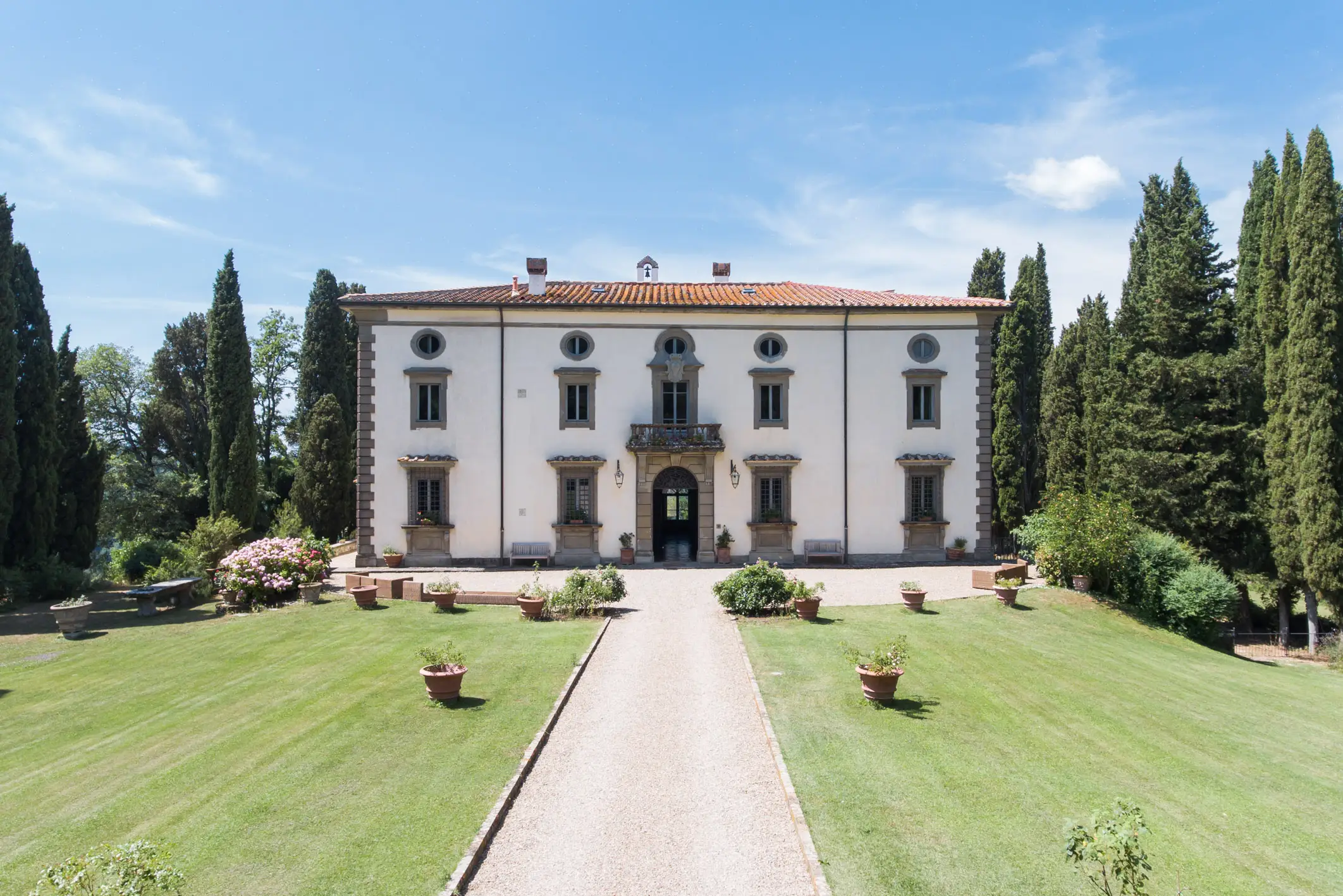
Casa Studio Piero Bargellini
Piero Bargellini (1897-1980) is, in the memory of all Florentines, the mayor of Florence who had to face the terrible tragedy of the 1966 flood. But not only that, from 1051 to 1956 he had been the Councillor for Fine Arts for the Municipality of Florence and, later, he also was a member of Parliament during two legislatures.
A prolific writer, passionate about the history of his city, during his long career he published more than 60 books.
His studio in the very centre of Florence was a meeting place for artists and writers, cinema and showbusiness personalities and intellectuals.
In the 16th century palazzo Da Cepparello, bought by Bargellini in 1946, you can visit the Studio, as it had been preserved and conceived by its owner: with high coffered ceilings and a cycle of 14th century frescoes hailing from the Chiesa delle Busche church near Carmignano (Prato).
Enrico Caruso Museum
The bond between Enrico Caruso and the Bellosguardo Hill above Lastra a Signa was a love one, born after the relationship withAda Giachetti. They visited the ruined country house together, bought it and lived there more uxorio. Caruso invested a huge amount of money in the re-building of the house, giving work to the locals in a time when the major source of income -the straw manifacturing- had a strong crisis. The result was a beautiful mansion, in a dominant position above the Arno valley, with a majestic Italian garden and agricultural estate.
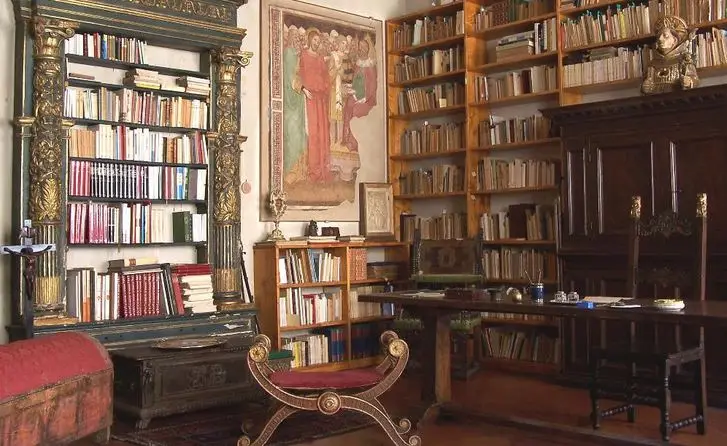
Enrico Caruso was the very first Italian divo, a tenor who knew how to use all the tools belonging to that age, from the (silent) cinema to the recording on vinyl to amplify his voice over and over, in addiction to the stage exhibitions. The exposition is in the rooms of the noble floor of the mansion, including the tenor bedroom, with original furniture. In another room there are Caruso's drawings, mostly caricatures that Caruso used to draw to relax. There is also a collection of gramophones of the first years of XX century, all working, to testify the importance of recording his works. You will see then photos, both private and of shows and colleagues, shedules of the numerous theatres where Caruso performed all over the world, and scenes costumes, that will be exposed in rotation.
The museum also boasts special visual and audio effects, the sonor gushes, that you can enjoy in the music room: as if Caruso's voice invests the vistor who comes closer to the showcase. The Enrico Caruso Museum is in Villa Caruso Bellosguardo, above Lasta a Signa.
Museo del Ciclismo Gino Bartali
Das Fahrradmuseum, nach dem toskanischen Radweltmeister Gino Bartali benannt, befindet sich in Ponte a Ema, gerade wo der große Radfahrer geboren wurde und seine sportliche Karriere begann. Das Gebäude besteht aus drei Etagen und umfasst mehr als 1000 Qm.
Im Untergeschoss befindet sich der Raum mit der Ausstellung von historischen Fahrrädern, die einen Überblick über deren technische Entwicklung bieten, während im ersten Stock die Ausstellung von Velozipeden, Fahrrädern, Kleidung und Memorabilien, die die Geschichte des Radsports und die Heldentaten von Gino Bartali und anderen Champions dokumentieren, zu bewundern sind.
Sammlungen von Zeitungen der damaligen Zeit, zahlreiche Publikationen und Filme ergänzen den Rundgang.
Das Museum ist für alle Kinder und Jugendlichen empfohlen, die Radfahren lieben oder die Geschichte des Radfahrens kennenlernen möchten.

Zu Hause bei Franco und Lidia Luciani
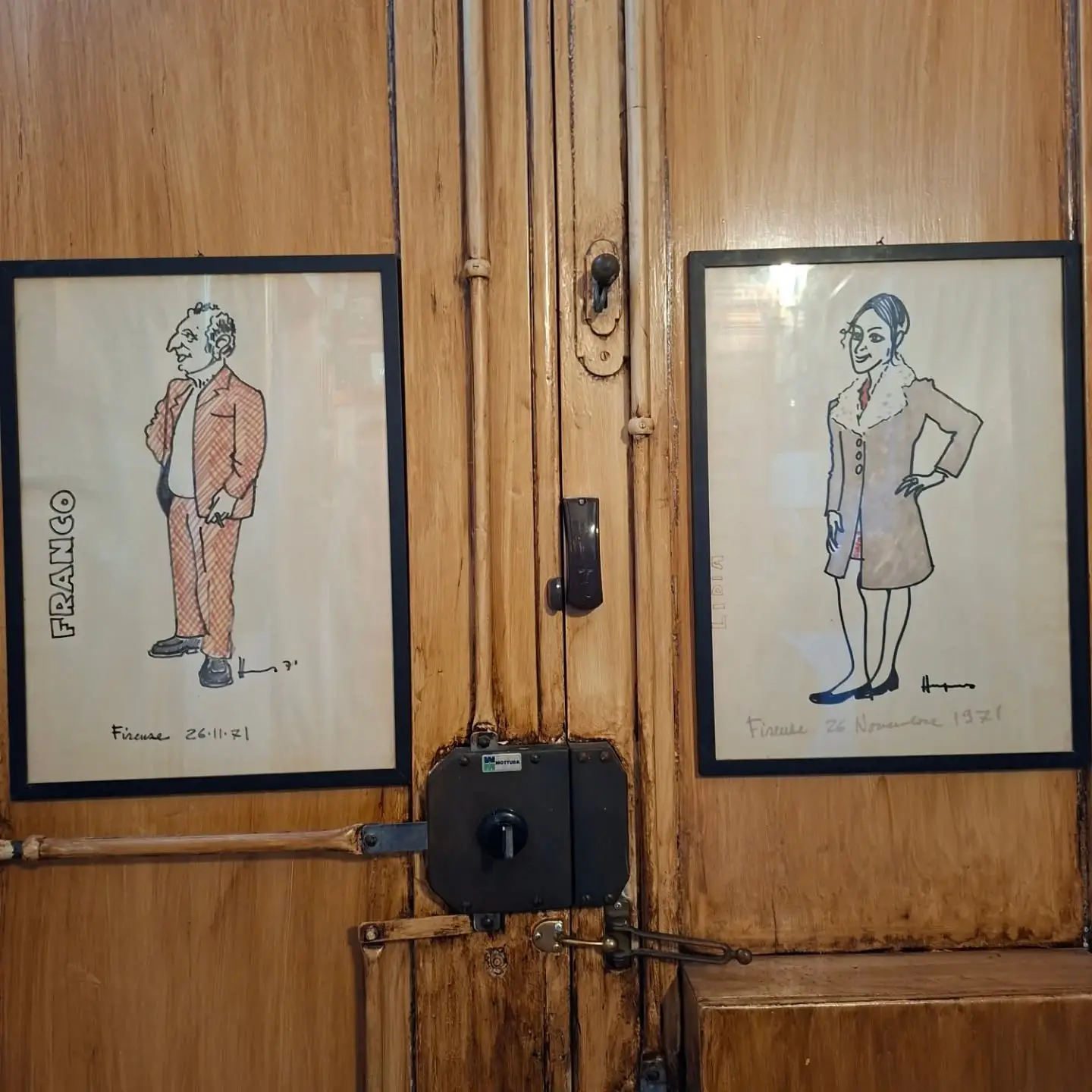
Das Haus von Franco und Lidia Luciani ist ein Reihenhaus, das Mitte der 1920er Jahre erbaut wurde und sich im Stadtteil Gavinana im Südosten von Florenz befindet.
Das Haus beherbergt eine bedeutende Sammlung von Gemälden, Stichen, Drucken, Keramiken, Majolika, Bronzen, Büchern, Postkarten und antiken Möbeln, die Franco, Jahrgang 1930, im Laufe seines Lebens zusammengetragen hat, wobei ihn seine Frau Lidia bei dieser Leidenschaft unterstützte.
Beide hatten eine klassische Ausbildung und begeisterten sich insbesondere für die toskanische Malerei des 19. Jahrhunderts. Im Laufe ihres Lebens erwarben sie zahlreiche Gemälde von Meistern der Macchiaioli- und Post-Macchiaioli-Bewegung – jener Künstler, die ab 1860 die italienische Malerszene belebten und entscheidend zur Erneuerung der traditionellen Malästhetik beitrugen und damit Vorläufer des Impressionismus waren.
Die in diesem Haus aufbewahrte Sammlung entstand Ende der 1950er Jahre auf Initiative von Franco und wurde von Jahr zu Jahr erweitert, bis zu seinem Tod im Jahr 2006. Viele der in der Casa ausgestellten Gemälde wurden im Laufe der Jahre bei Ausstellungen und Vernissagen gezeigt. Zu den Künstlern zählen Nomellini, Lomi, Natali, March, Filippelli und Corcos sowie die florentinischen Maler der Macchiaioli-Bewegung Signorini, Cabianca und Tommasi und die Florentiner Stadtansichten von Borrani.
Nun, da Franco und Lidia nicht mehr unter uns sind, bleibt in dem Haus, in dem sie ihr Leben verbracht haben, die Sammlung erhalten, die sie aufgebaut, geprägt und von ganzem Herzen geliebt haben.
Museum und Stiftung Primo Conti
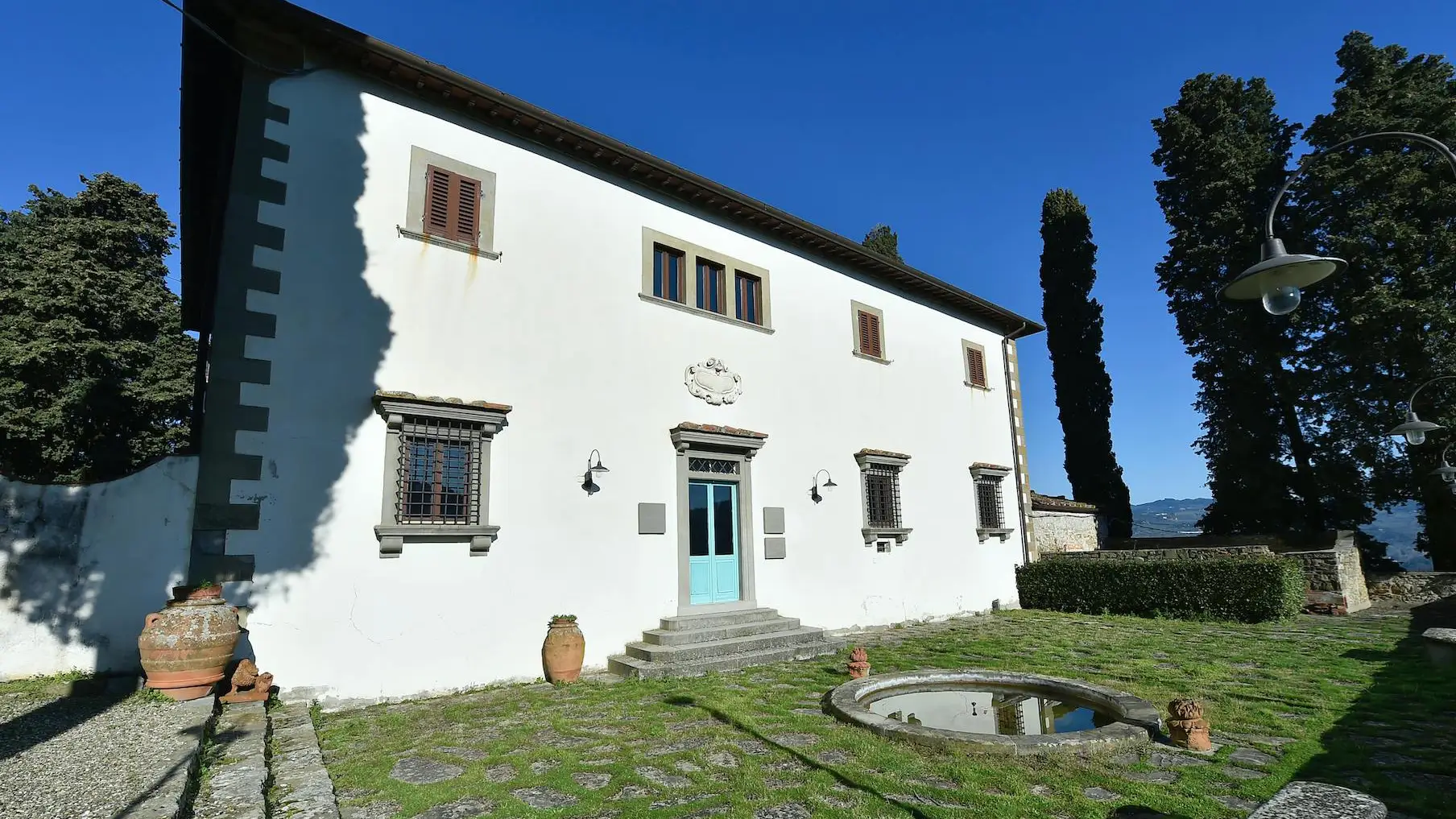
Die aus dem 15. Jahrhundert stammende Villa Le Coste, die viele Jahre lang das Wohnhaus des Malers Primo Conti war, ist Sitz der Stiftung, zu der das Archiv – mit über hunderttausend Dokumenten, die vor allem den Futurismus und seine Protagonisten betreffen – sowie das Museum gehören.
Primo Conti, der von 1900 bis 1988 lebte, war auch Komponist und Schriftsteller.
Im Museum sind etwa sechzig Gemälde und einhundertfünfzig Zeichnungen von Primo Conti versammelt, die einen Zeitraum von 1911 bis 1985 abdecken und es ermöglichen, anhand des Werks des florentinischen Malers die Entwicklung der Kunstgeschichte des 20. Jahrhunderts in Italien und Europa zu untersuchen.
Stiftung Michelucci
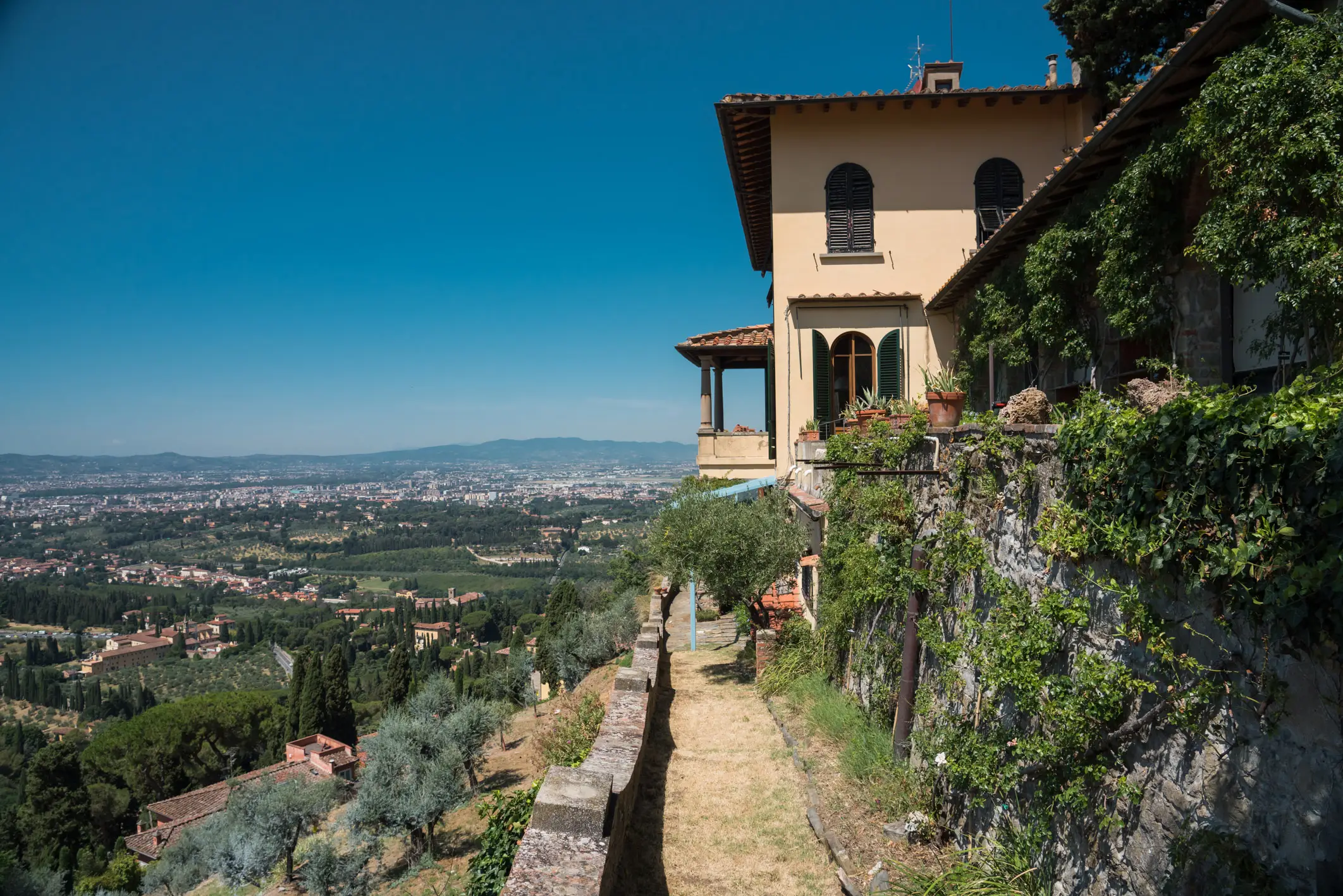
Giovanni Michelucci, ein großer Protagonist der italienischen Kultur des 20. Jahrhunderts, war einer der größten italienischen Architektendes 20. Jahrhunderts. Im Sitz der Stiftung, Villa Il Roseto oder dem Haus, in dem er die letzten Jahre seines Lebens verbrachte, können das Archiv, die Memoiren des Architekten, die Zeichnungen, die Modelle und die Bibliotheksbestände angesehen werden. Man kann die von ihm entworfenen Möbel und die Gemälde seiner Frau Eloisa Pacini sowie viele Kunstwerke seiner befreundeten Architekten und Künstler bewundern.
Nach 35 Jahren Tätigkeit zeichnet sich die Stiftung als origineller und etablierter Bezugspunkt für Forschungen/Projekte zu den Themen sozialer Lebensraum und die Beziehung zwischen Raum und Gesellschaft aus. Auch die Herausgabe der Zeitschrift La Nuova Città ist mit der Stiftung verbunden.
Von der Villa Il Roseto, in der die Stiftung ihren Sitz hat, hat man einen der schönsten Ausblicke auf Florenz und das Arno-Tal. Darüber hinaus können Sie einen komplett terrassierten Garten voller Hortensien, Rosen, Azaleen und geschmückter Bäume bewundern: Olivenbäume, Zypressen, Orangenbäume, Granatäpfel, Kirschbäume und typische Pflanzen der mediterranen Macchia.
Villa Il Gioiello
***Die Villa ist derzeit geschlossen
Villa il Gioiello, auch Villa Galileo genannt, ist das Haus, in dem der große Wissenschaftler Galilei den letzten Teil seines Lebens verbrachte, der durch die Verurteilung des Heiligen Offiziums im Jahre 1633 unter Hausarrest gestellt wurde. Die Universität von Florenz ist für die Erhaltung und Aufwertung der Villa und des Geländes, in dem sich der Galileische Garten befand, verantwortlich. 2006 wurde die Villa restauriert. Heute beherbergt die Villa Konferenzen und Seminare, die von Forschungs- und Hochschulzentren in Arcetri organisiert werden.

Fondazione Casa Buonarroti
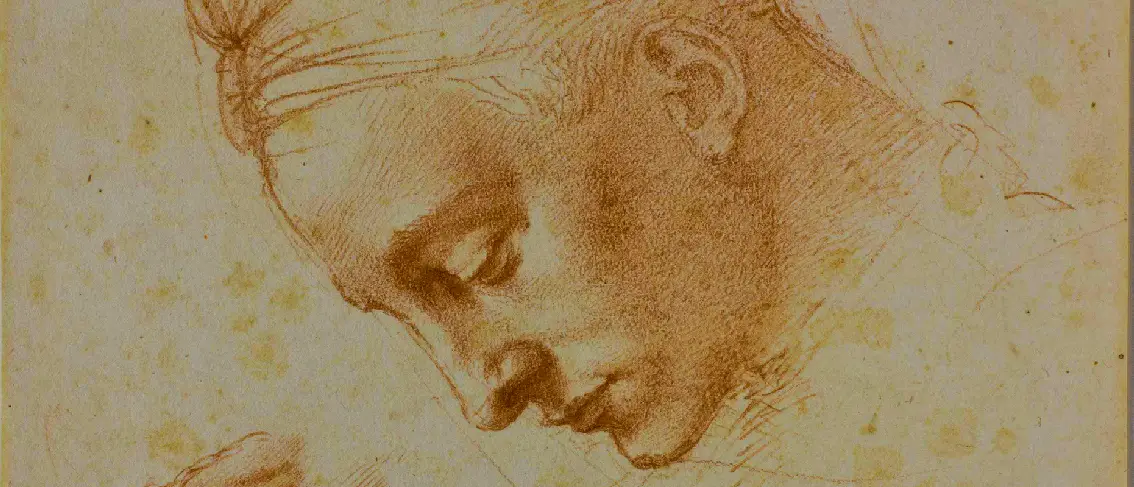
Michelangelo Buonarroti erwarb das Anwesen um 1510. Der Palast nahm sein heutiges Ansehen dank seines Großneffen Michelangelo il Giovane (Michelangelo Buonarroti der Junge) an, einer außergewöhnlichen Figur der Florentiner Kultur im 17. Jahrhundert, der vier Räumen mit Gemälden zur Verherrlichung der Familie dekorieren ließ. Den Werken von Michelangelo, wie die Sammlung von Zeichnungen, die Madonna della Scala und die Battaglia dei Centauri (Schlacht der Zentauren) kamen im Lauf der Zeit römische Skulpturen, Gemälde aus den 16. und 17. Jahrhundert, robbianische Majoliken und schließlich etruskische Fundstücke hinzu. Das große Holzmodell für die Fassade der Kirche von S. Lorenzo und das Dio Fluviale (Flussgott), bildhauerisches Modell für die Neue Sakristei, beide von Michelangelo, kommen aus anderen Florentiner Museen, während kleinere Einheiten der Sammlung von Zeichnungen Michelangelos werden im Rotationsverfahren ausgestellt.
The Filippo Dobrilla House Museum and Arts Centre
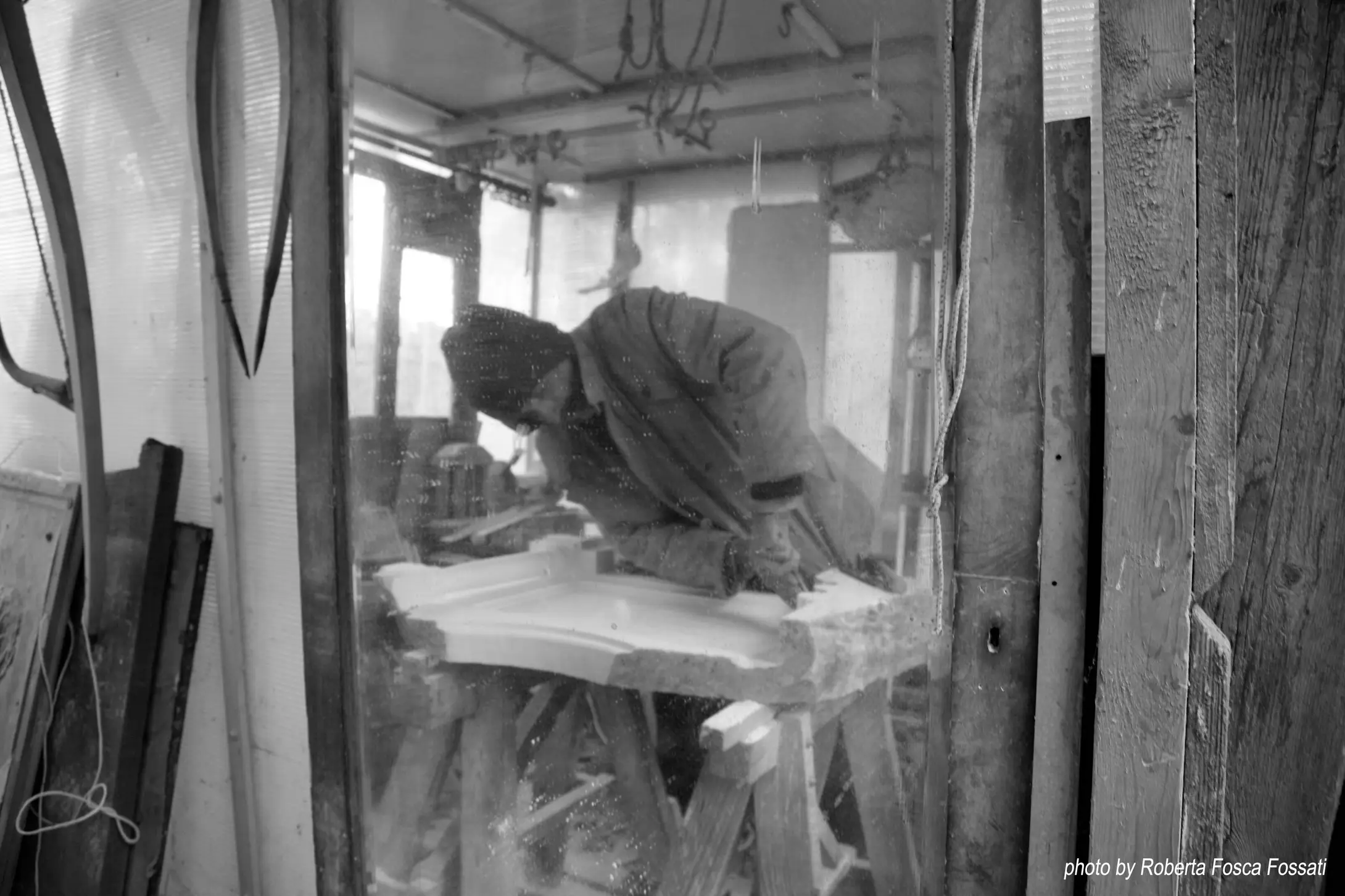
The Filippo Dobrilla House Museum and Arts Center is a place where art and everyday life are deeply intertwined. It was here that the sculptor Filippo Dobrilla (1968–2021) lived and worked, allowing time, movement and material to interact naturally.
The rooms still retain the authentic atmosphere of a lived-in home, conveying the artist’s living presence through the spaces, the tools and the works that fill them.
Filippo Dobrilla carved marble with respect and dedication, following the stone’s own voice and accepting its resistance as part of the creative process. His work sprang from a direct, physical relationship with the material, characterised by patience, attentiveness and profound understanding.
Each sculpture bears the mark of a long, shared process, in which the form emerged little by little.
Alongside art, the land played a central role in his life. Cultivating the fields, following the rhythm of the seasons and tending to the plants were activities that complemented his work as a sculptor. The earth and marble – different materials, yet equally alive – marked the rhythm of his days, providing a profound balance between artistic creation and agricultural labour.
Visiting the house-museum means stepping into a world where art is not separate from life, but is a natural extension of it. It is a place of memory and presence, where one can still sense the strong bond between people, materials and nature, and where visitors are invited to slow down, observe and listen.