

The love story between Francesco I de' Medici and Bianca Cappello: intrigue and mystery in the palaces of Florence
The overwhelming passion between Francesco I de' Medici and Bianca Cappello is a bond that has left traces still visible in the city and its surroundings, in the luxurious grand ducal residences that have witnessed passion, politics, and tragedy.
A fateful encounter and a scandalous love affair
In 1570, Francis I, Grand Duke of Tuscany, married to Joanna of Austria, daughter of Ferdinand I of Habsburg, met Bianca Cappello, a charming Venetian noblewoman who soon became the center of his life.
Their relationship, which began in secret and later became public, caused scandal, as Bianca was a married woman and was considered a “woman of low birth,” and her union with Francesco raised doubts about mysterious power games.
In 1578, Giovanna died suddenly, while Bianca's husband had been mysteriously murdered a few years earlier. Just one year later, Francesco officially married Bianca, elevating her to the rank of Grand Duchess. Despite their marriage, their love was always the subject of gossip and suspicion until their deaths in 1587 at the villa in Poggio a Caiano, just a few hours apart.
The symbolic places of their love story in Florence and its surroundings
Palazzo Pitti: The historic residence of the Medici family, Palazzo Pitti is one of the most significant places linked to the lives of Francesco I and Bianca Cappello. Located in Piazza Pitti, this magnificent palace was designed by architect Filippo Brunelleschi and later enlarged by Bartolomeo Ammannati at the behest of Francesco I. Here, among the marvellous rooms and gardens, the couple lived most of their lives together.
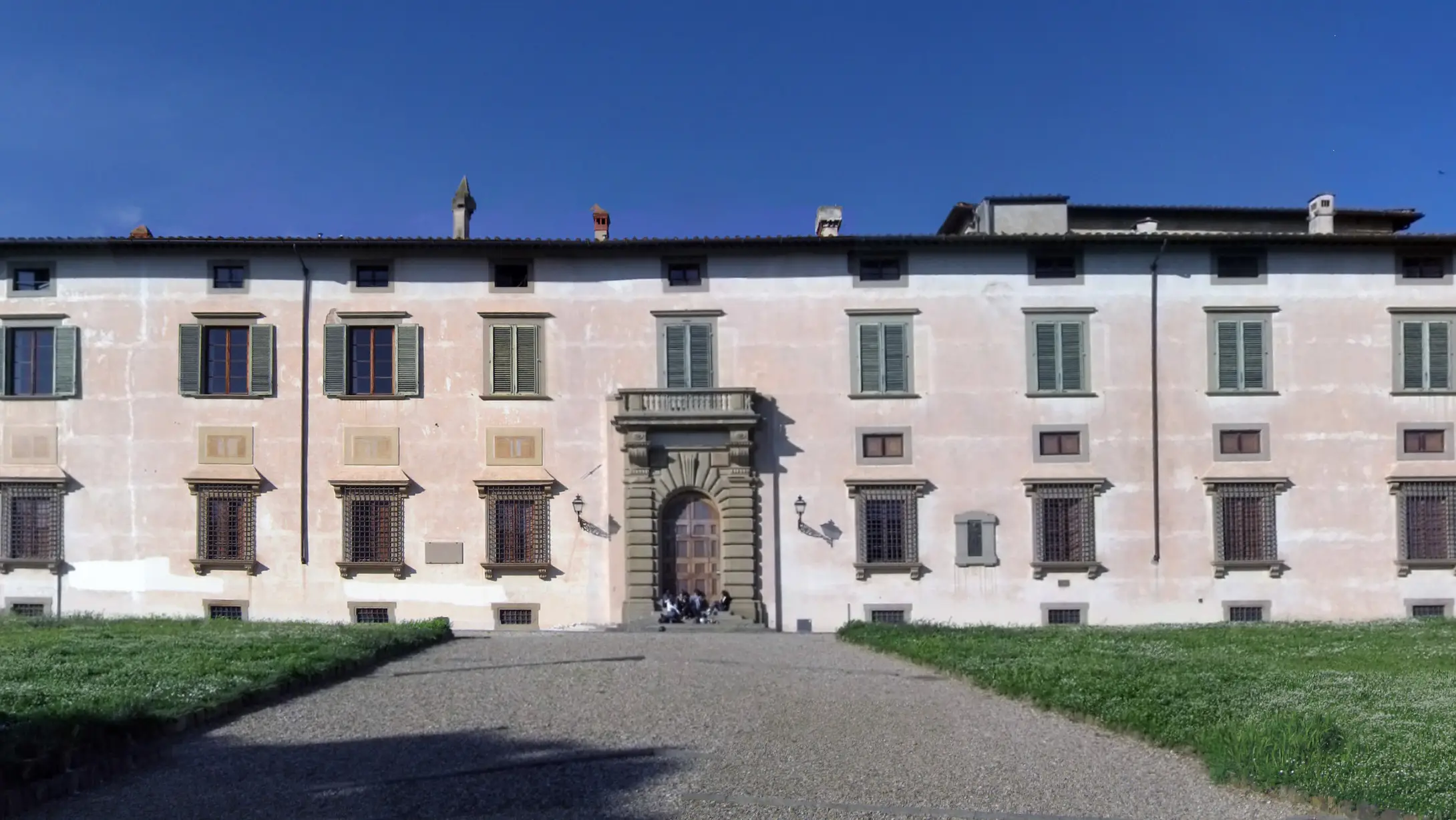
Villa Medici di Castello: Located a few kilometres from Florence, Villa Medici di Castello is one of the most famous residences of the Medici family. The villa was enlarged and decorated in the 16th century thanks to the work of Niccolò Pericoli, known as Tribolo, Giorgio Vasari, and Bernardo Buontalenti, who contributed to the creation of the magnificent gardens. Villa di Castello was a place of leisure and refuge for the Medici court, and even Francesco and Bianca spent moments of tranquillity there, far from the vicissitudes of politics. Surrounded by greenery and with a panoramic view of Florence, this villa with its Renaissance gardens now houses the headquarters of the Accademia della Crusca.
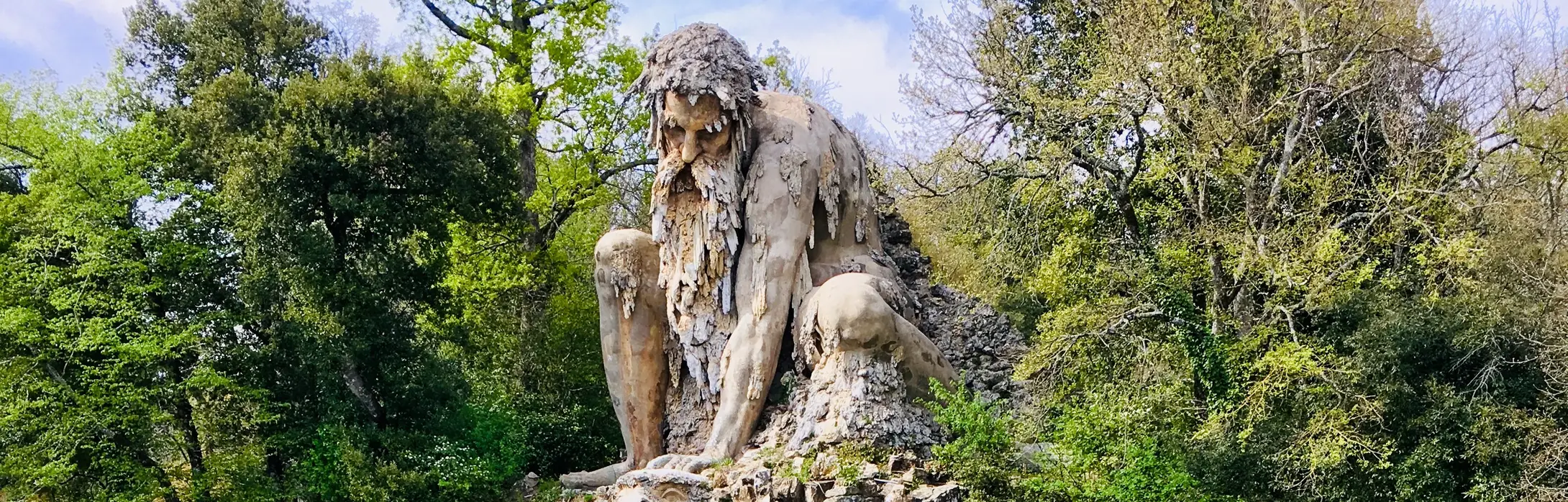
Villa Medici di Pratolino: Another place that was part of the Medici family's life is the Villa di Pratolino, located on the outskirts of Florence. The villa was designed by Buontalenti at the behest of Grand Duke Francesco I. Completed in 1568, the villa was demolished in the 19th century, but its magnificent park and monumental statue of the Apennines by Giambologna remain, standing tall in the park as a reminder of the Park of Wonders that fascinated and amazed visitors with its water features and animated automata.
Bianca Cappello's palace in Via Maggio: Before becoming Grand Duchess of Tuscany, Bianca Cappello lived in a palace located in Via Maggio, in the heart of Florence. This residence, with its façade decorated with magnificent grisaille graffiti by Bernardino Poccetti, was enlarged and modernised according to a design by Bernardo Buontalenti, on behalf of Grand Duke Francesco.
Gallerie degli Uffizi
Useful information
The places
Stages
Piazza Pitti
Piazza de' Pitti, almost completely dominated by the imposing ashlar facade of Palazzo Pitti, is one of the most beautiful squares, recently pedestrianized, in the Oltrarno. The Pitti complex, in addition to the Boboli Gardens, includes 5 museums: the Palatine Gallery, the Gallery of Modern Art, the Treasury of the Grand Dukes, the Museum of Fashion and Costume, the Porcelain Museum.
Built in a secondary area of the city, on the slopes of the Boboli hill, the palace was commissioned by the banker Lucca Pitti (1457); it was then expanded, about a century later, when it was bought by the Medici, becoming the family's most prestigious residence. In 1620 Giulio Parigi enlarged the façade, while in the eighteenth century, the Lorraine family built the two lateral wings that delimit today's slightly uphill square, to further underline the majesty of the complex.
In the square, in addition to Palazzo Pitti, there are other important buildings, including Palazzo Guicciardini and Palazzo Temple Leader. In the square some plaques mark the houses where illustrious people lived: at no. 18 is the home of Paolo dal Pozzo Toscanelli (the astronomer who inspired Christopher Columbus), while at no. 2 the house where Fyodor Dostoevskij worked on his masterpiece, The Idiot. In the immediate vicinity of Piazza Pitti is Casa Guidi, the house-museum where the English poet Elizabeth Barrett Browning lived.

Medici Villa of Castello
The Medici Villa of Castello, one of the oldest Medici residencies, was one of the favourite villas of Cosimo I especially for its garden, designed in 1538 by Niccolò Tribolo. Thanks to the plenty of citrus and rare plants in the "Lemon Garden" and to the ancient and Renaissance sculptures, it was judged by Vasari as one of the richest gardens in Europe and the testimony of Leon Battista Alberti tells that it is the example of garden preserved in the best way.Today is home to the Accademia della Crusca was founded in 1585 to promote and preserve the Italian language. The Accademia still conducts research and consultancy work today.
Pratolino Medici Park
On the road connecting Florence with Bologna is a beautiful park that is also a Unesco heritage site: the Parco Mediceo di Pratolino
In the second half of the 16th century, Francesco I de’ Medici commissioned Bernardo Buontalenti to build a villa (later demolished) and a surrounding park; the latter attracted great interest at the time because of the unusual artificial grottoes, water tricks and statues, and was immediately described as “the garden of marvels”.
After Francesco’s death the park had a chequered history until it was bought by the Russian prince Paul Demidoff in the 19th century. He restored the remaining Renaissance elements, including Giambologna’s colossal Apennines statue overlooking a small lake. Inside the statue there used to be grottoes with decorative features, frescoes and water tricks. The decorations have been lost, as have those in Cupid’s Grotto, although there are still a few sculptures, pondsand grottoes dotted around the park. The only building that has survived to the present day without major modification is the chapel, built by Buontalentiin 1580.
This park is the ideal place for a day out with your children: you can have a picnic on the large lawns, walk or have fun at the playground and also walk your dog.
The park can be reached by bus 25A or 307A, direction Pratolino.
The palace of Bianca Cappello
Before becoming Grand Duchess of Tuscany, companion to Grand Duke Francesco I, Bianca Cappello lived in a palace located in Via Maggio, not far from the Grand Ducal Palace in Piazza Pitti.
The palace, with its façade decorated with magnificent grisaille graffiti by Bernardino Poccetti, was enlarged and modernised based on a design by Bernardo Buontalenti on behalf of Francesco himself, who had commissioned the work for his favourite.
Bianca Cappello was originally from Venice and was married to Pietro Bonaventuri, a Florentine man of limited financial means.
Very beautiful and very ambitious, Bianca charmed Francis I and became his mistress. In 1578, Grand Duchess Joanna of Austria died in an accident, and shortly afterwards Francis secretly married Bianca, only making their union public on 10 June 1579. Francis's brother, Ferdinand, always opposed this union.