Florence's Music Scene: Places That Made History
Florence is a city deeply shaped by music, especially the music of the 1970s and 1980s, which found its home in squares, underground clubs, and hidden recording studios. Many historic venues that no longer exist today were once at the heart of the city’s music scene — such as Banana Moon in Borgo degli Albizi, La Siesta in Via dei Cimatori, and the more distant Casablanca at the Casa del Popolo in Rifredi — also thanks to the rise of Florence’s independent and revolutionary radio stations like Radio Centofiori and Controradio, which celebrated fifty years of broadcasting this year.
"Florence Calling" Exhibition at MAD Murate Art District
From July 2 to September 20, 2026, MAD Murate Art District presents "Florence Calling", a major exhibition that transports the public back to the heart of 1980s Florence, a time when the city established itself as one of Europe’s most vibrant creative hubs. It was a unique era in which music, theater, fashion, design, visual arts, and new urban expressions intertwined, giving rise to an innovative, international cultural scene.
Litfiba and the “Places of Music”
Spaces such as Ira Sound Lab and G.A.S. Studio witnessed the creation of albums that defined an era, including Siberia by Diaframma and Desaparecido by Litfiba, the iconic band of the Florentine new wave scene. Crossing the Arno and venturing into the Oltrarno district, in Via de’ Bardi you can still find the plaque marking the band’s historic basement rehearsal room. All these places have been carefully mapped in the “Places of Music” map created for MusArt Festival 2024, thanks to the consultancy of Bruno Casini — writer and expert on Florence’s music scene — and marked with dedicated commemorative plaques.
The Most Iconic Concerts: from Iggy Pop to The Clash
Among the streets of the historic center, people also remember iconic and more recent concerts, such as the 2012 performance by the rock iguana Iggy Pop & The Stooges in Piazza della Repubblica before thousands of spectators during the “Hard Rock Cafe Rocks the Square” event (the famous venue is located right on the square); or Patti Smith’s concert in Piazza Santa Croce in 2009, celebrating the thirtieth anniversary of her historic 1979 performance at the Artemio Franchi Stadium. The stadium also hosted unforgettable concerts by The Clash in 1981, David Bowie in 1987, Madonna in both 1987 and 2012, and Bruce Springsteen in 2003 and 2012.
Auditorium Flog and Tenax
Moving away from the more touristy routes, even more musical history emerges. In 1972, one of Florence’s landmark live music venues was born: the Auditorium Flog (currently temporarily closed), where Radiohead performed a legendary concert in 1994. In 1981 — the same year Echo & The Bunnymen played a concert in the square beside the Uffizi Gallery — a new nightclub opened near the airport that would become one of the most famous and frequented venues in Italy: Tenax. Everyone performed there, from Spandau Ballet to Ben Harper, along with some of the world’s most renowned DJs, creating an astonishing hall of fame.
Parco delle Cascine, Temple of Music
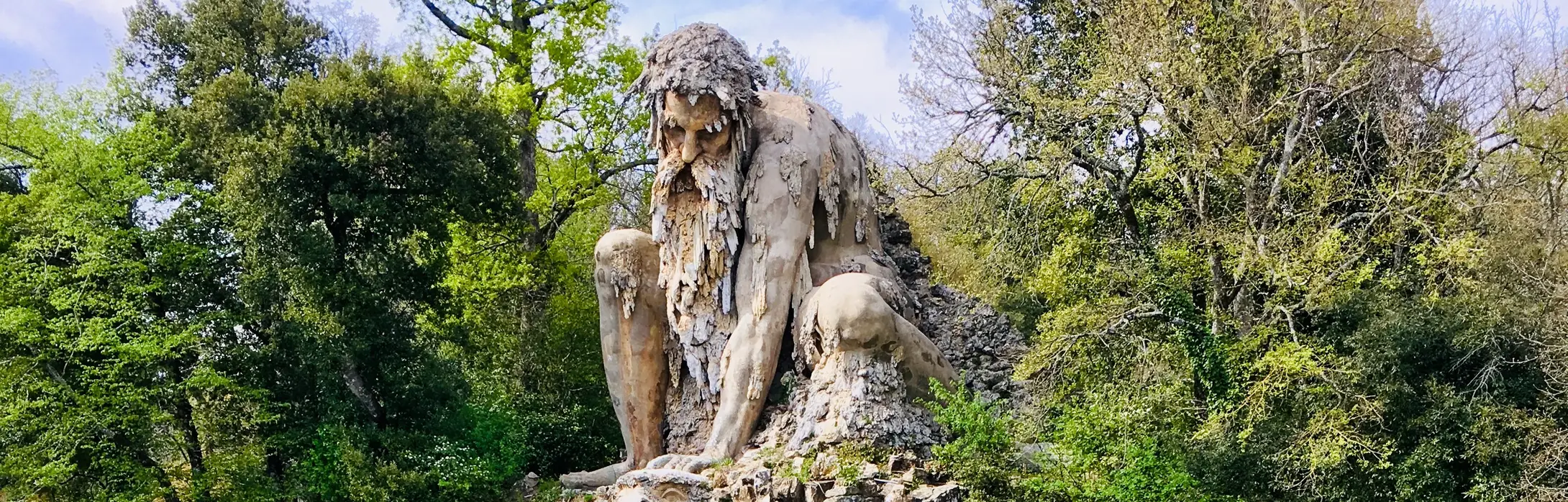
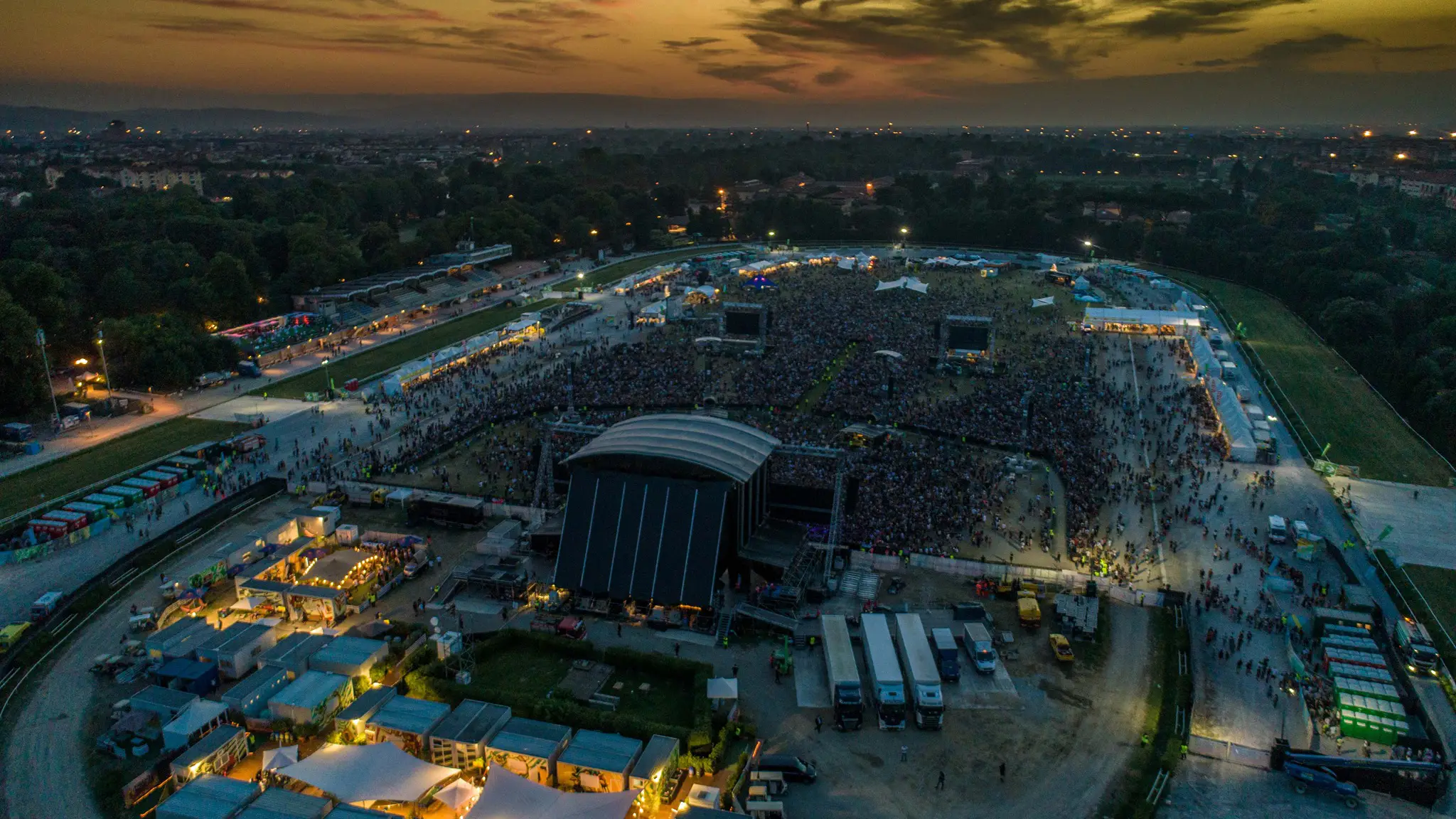
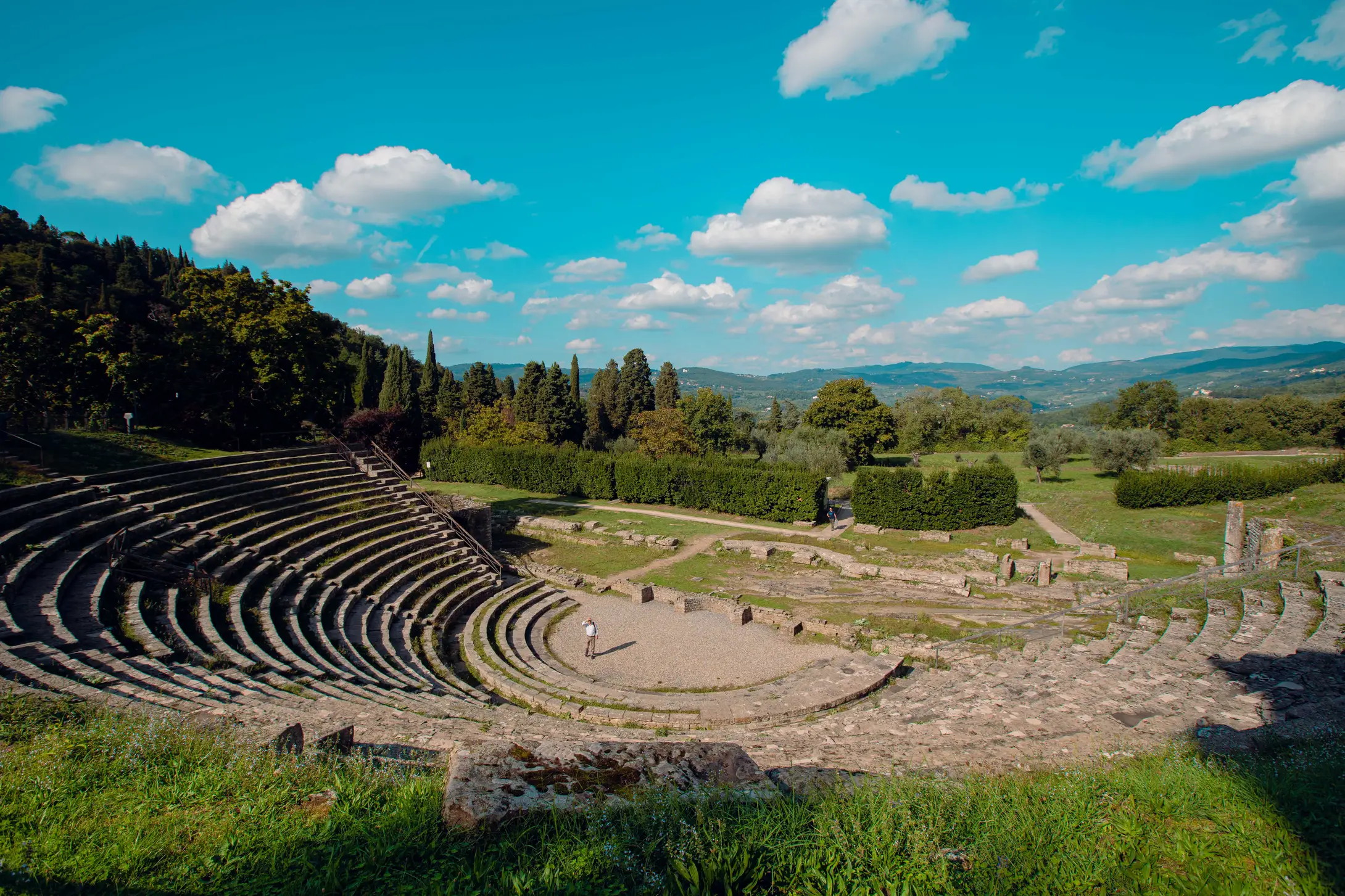
Finally, it would be impossible not to mention the area around Parco delle Cascine, home to the Visarno Arena, which since 2017 has hosted one of Italy’s largest festivals, Firenze Rocks. Its archive boasts world-famous headliners including The Cure, Metallica, Green Day, Muse, Red Hot Chili Peppers, Ed Sheeran, Guns N’ Roses, and Aerosmith, performing before tens of thousands of fans. Continuing through the park, you reach the Prato del Quercione just beyond Piazzale delle Cascine, where Peter Gabriel (with Simple Minds as the opening act) and Lou Reed performed in 1980. Nearby stands the evocative Cascine Amphitheatre (also known as the “Cornacchie” Amphitheatre), venue for unforgettable summer concerts, often associated with the Roman Theatre of Fiesole, a temple of summer music since 1962 thanks to its Estate Fiesolana festival (and of classical theatre productions since its first staging in 1911). Last, but certainly not least, is the magnificent and enchanting Medici Park of Pratolino, which for the past three years has hosted the prestigious MusArt Festival, founded in 2016.
The places
Stages
Visarno Arena
Visarno Arena is a venue for concerts and events inside the Visarno Ippodrome at the Cascine Park.
Anfiteatro delle Cascine Ernesto De Pascale
Archaeological Museum and Archaeological area
The museum exhibits chart the ancient history of Fiesole and the surrounding area: human presence in the zone dates back at least as far as the Bronze Age (around 2000 BC), while the cityitself began to develop at the end of the 4th century BC. Fiesole was an important Etruscan settlement, occupying a strategic position controlling routes between southern Etruria and the Etruscan settlements in the Po area, and a bulwark against invasions from northern peoples, in particular the Gauls. It became a Roman colony in 80 BC, though it retained its Etruscan characteristics: in fact, the Romans chose to settle in the valley, founding Florence.
The museum is connected to the Archaeological Zone, comprising the excavations of a theatre, baths and an Etruscan-Roman temple. The museum also houses the Costantini Collection, consisting of ancient Greek vasesand a reconstructedLombard tomb. Also of note are various Etruscan bronzes, black- and red-figure Greek and Etruscan ceramics, and marble friezes from the Roman theatre.
Piazza della Repubblica
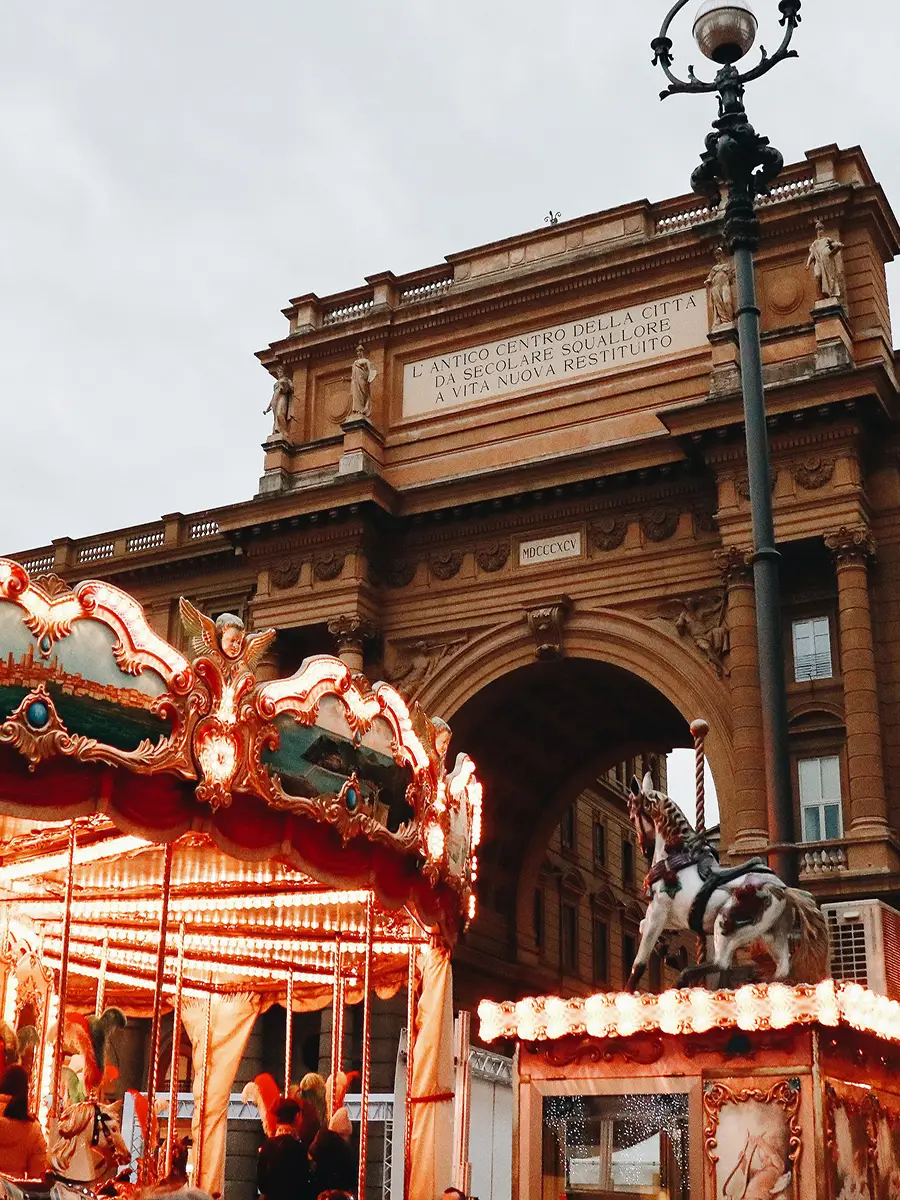
The vast square piazza della Repubblica is the result of the nineteenth-century demolition of the ancient city centre, at the time of Florence as the capital of Italy (1865-1871).
This was one of the most characteristic areas and over the centuries it had kept the medieval building fabric almost intact, with narrow streets and buildings leaning against each other. Here, together with medieval towers, artisan workshops, houses, there were also the Jewish ghetto and Vasari's Loggia del Pesce (the "Fish Loggia", later rebuilt in Piazza de' Ciompi); in the center was the Piazza del Mercato Vecchio (the "Old Market") built on the site of the Forum of the Roman city (the Column of Abundance marks the meeting point between the Cardo and the Decumanus, the two main Roman streets). The operation was presented as necessary to restore the hygienic and sanitary conditions of the area.
The background of the square is dominated by the monumental portico, the "Gallery" created by Vincenzo Micheli in 1895 - passing under the large central arch you can easily reach Palazzo Strozzi and via Tornabuoni - while on the sides the square is animated by numerous venues, including a series of important historical cafés once a meeting place for artists and writers.
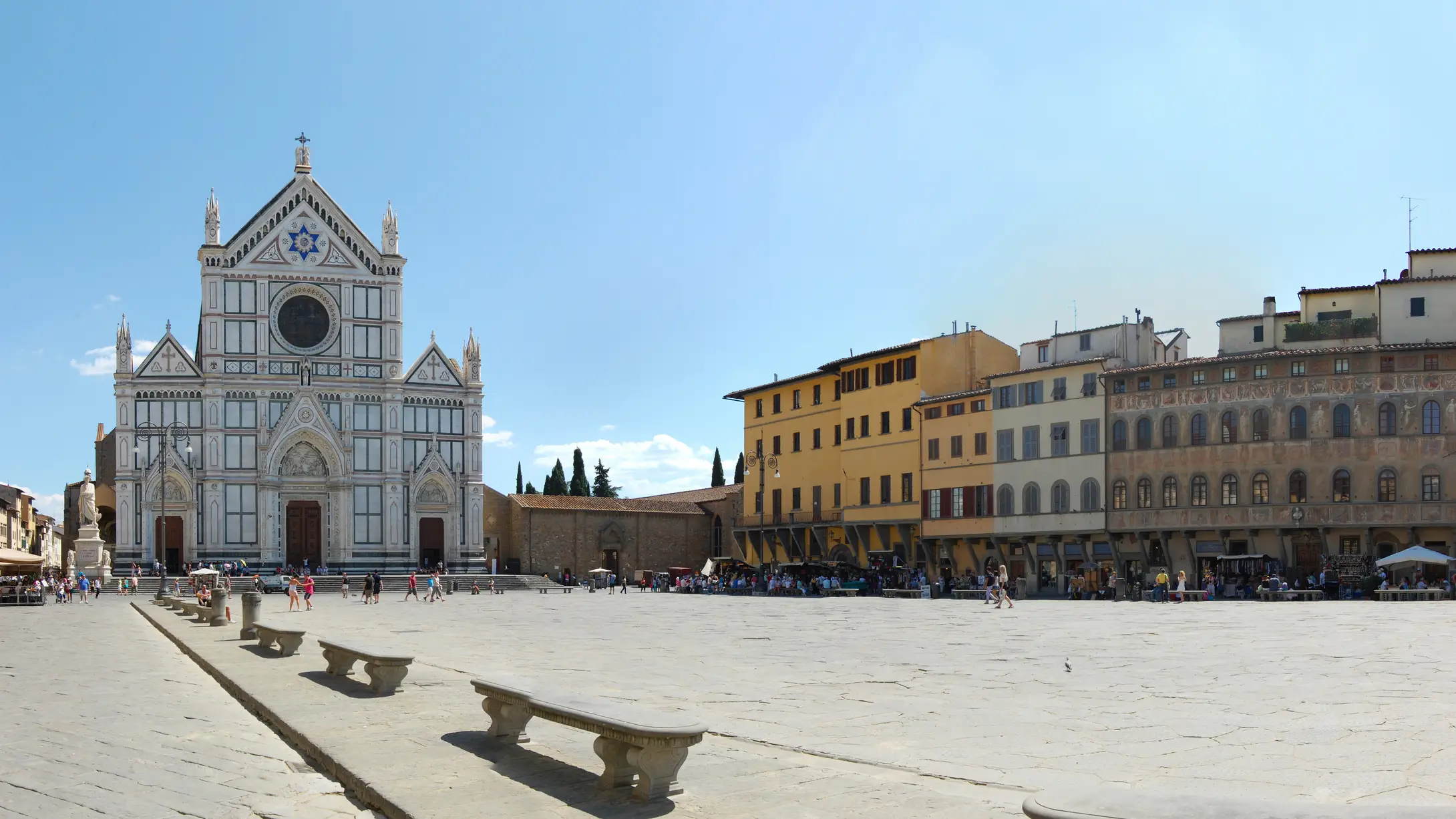
Piazza Santa Croce
This square took shape at the end of the 13th century, when the worldwide famous Basilica of Santa Croce, of the Franciscan Order, was rebuilt (1295), based on a design by Arnolfo di Cambio, and incorporated within the last Arnolfian city walls. The late thirteenth-century church has imposing dimensions, in relation to the growing power of the Friars Minor and the square was enlarged accordingly. The space was used for preaching and, starting from the fifteenth century, it was the scene of horse rides and tournaments.. Between the 16th and 17th centuries, the physiognomy of the buildings overlooking it also took shape. Finally, in 1863 the construction of the neo-Gothic style façade of the church gave the square the appearance of a timeless place much appreciated by "metaphysical" painters. The monument to Dante Alighieri, in the churchyard, is a nineteenth-century work by Enrico Pazzi originally placed in the center of the square.
In the month of June the square completely changes its original appearance, transforming into a real playing field covered in sand and surrounded by stands: it is here that the matches of the famous Calcio Storico Fiorentino (Historical Football, one of the main popular traditions of Florence) are played in the month of June. Preceded by two semi-finals, the final is played on June 24th (on the occasion of the celebrations for Saint John the Baptist, patron saint of Florence). Among the buildings that stand on the square (right side, looking at the church) Palazzo Antellesi stands out, on whose unusually frescoed façade there is an ancient sign indicating the median line of the playing field.
A stone's throw from Piazza Santa Croce there is the Casa Buonarroti Museum, with interesting early works by Michelangelo, Piazza Cavalleggeri dominated by the National Library complex and, in the nearby Via de' Benci, the Horne Museum with the rich collection of the historian of art Robert Percy Horne.
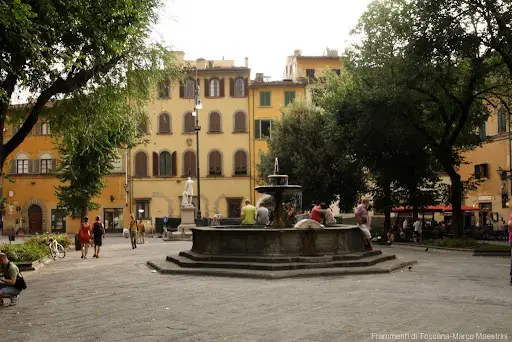
Oltrarno
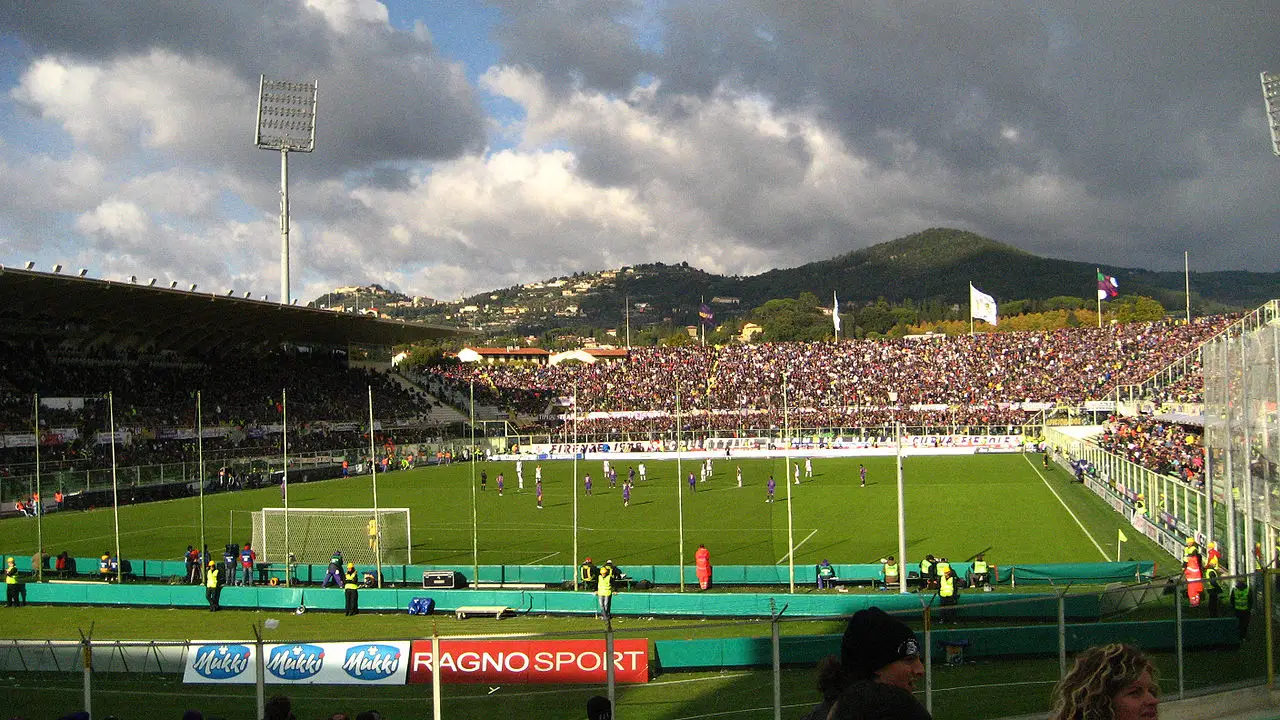
Stadio Comunale Artemio Franchi
The Franchi stadium was built between 1930 and 1932 based on a project by engineer Pier Luigi Nervi in the area of Campo di Marte. This Italian rationalist-style stadium shows some structural features which are very innovative for that time, such as the projecting roof without supports and the helical stairs. Commissioned to a company from Turin, the grass cover immediately turned out to be of excellent quality, thanks to its perfectly drained pitch. Over the years, the stadium has undergone several changes with works carried out especially for Italy 1990. Its capacity is 47,000 people. The football ground hosts the ACF Fiorentina matches.
Pratolino Medici Park
On the road connecting Florence with Bologna is a beautiful park that is also a Unesco heritage site: the Parco Mediceo di Pratolino
In the second half of the 16th century, Francesco I de’ Medici commissioned Bernardo Buontalenti to build a villa (later demolished) and a surrounding park; the latter attracted great interest at the time because of the unusual artificial grottoes, water tricks and statues, and was immediately described as “the garden of marvels”.
After Francesco’s death the park had a chequered history until it was bought by the Russian prince Paul Demidoff in the 19th century. He restored the remaining Renaissance elements, including Giambologna’s colossal Apennines statue overlooking a small lake. Inside the statue there used to be grottoes with decorative features, frescoes and water tricks. The decorations have been lost, as have those in Cupid’s Grotto, although there are still a few sculptures, pondsand grottoes dotted around the park. The only building that has survived to the present day without major modification is the chapel, built by Buontalentiin 1580.
This park is the ideal place for a day out with your children: you can have a picnic on the large lawns, walk or have fun at the playground and also walk your dog.
The park can be reached by bus 25A or 307A, direction Pratolino.