Fashion Museums in Florence
Fashion Museums in Florence: The History of Design from the 16th Century to the Present
As a capital of art and creativity, Florence is also a global benchmark for fashion. This itinerary takes you on a journey to discover world-class museums dedicated to style and the history of timeless Florentine brands like Ferragamo and Gucci.
Through this tour—a must for fashion enthusiasts—you will enjoy a unique day in Florence’s historic center (and beyond). Explore magnificent palaces turned into museums that preserve and showcase collections of garments, accessories, and textiles. These exhibits document the evolution of costume from the 1500s to the contemporary era, weaving together history, craftsmanship, and the luxury industry.
In the city center
- Museum of Fashion and Costume at Palazzo Pitti (included in Firenze Card)
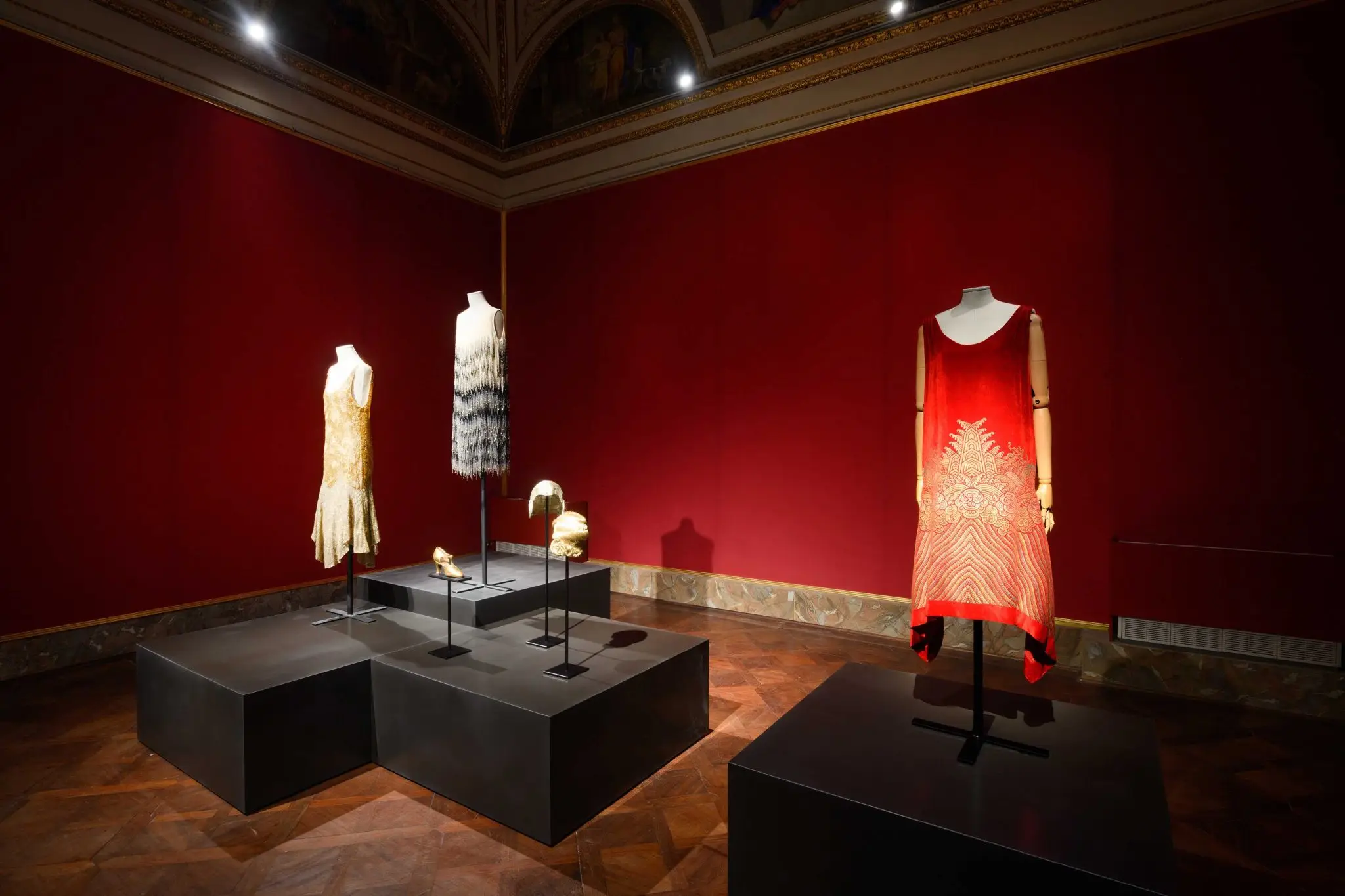
Located within the Palazzina della Meridiana of Palazzo Pitti, this is one of Italy’s premier institutions for the history of fashion. It houses over 15,000 artifacts, including historic gowns, accessories, and costumes dating from the 16th century to today. Completely renovated in 2024, the exhibition now unfolds across 12 new rooms, including the refined 19th-century Ballroom. - Ferragamo Museum (included in Firenze Card)
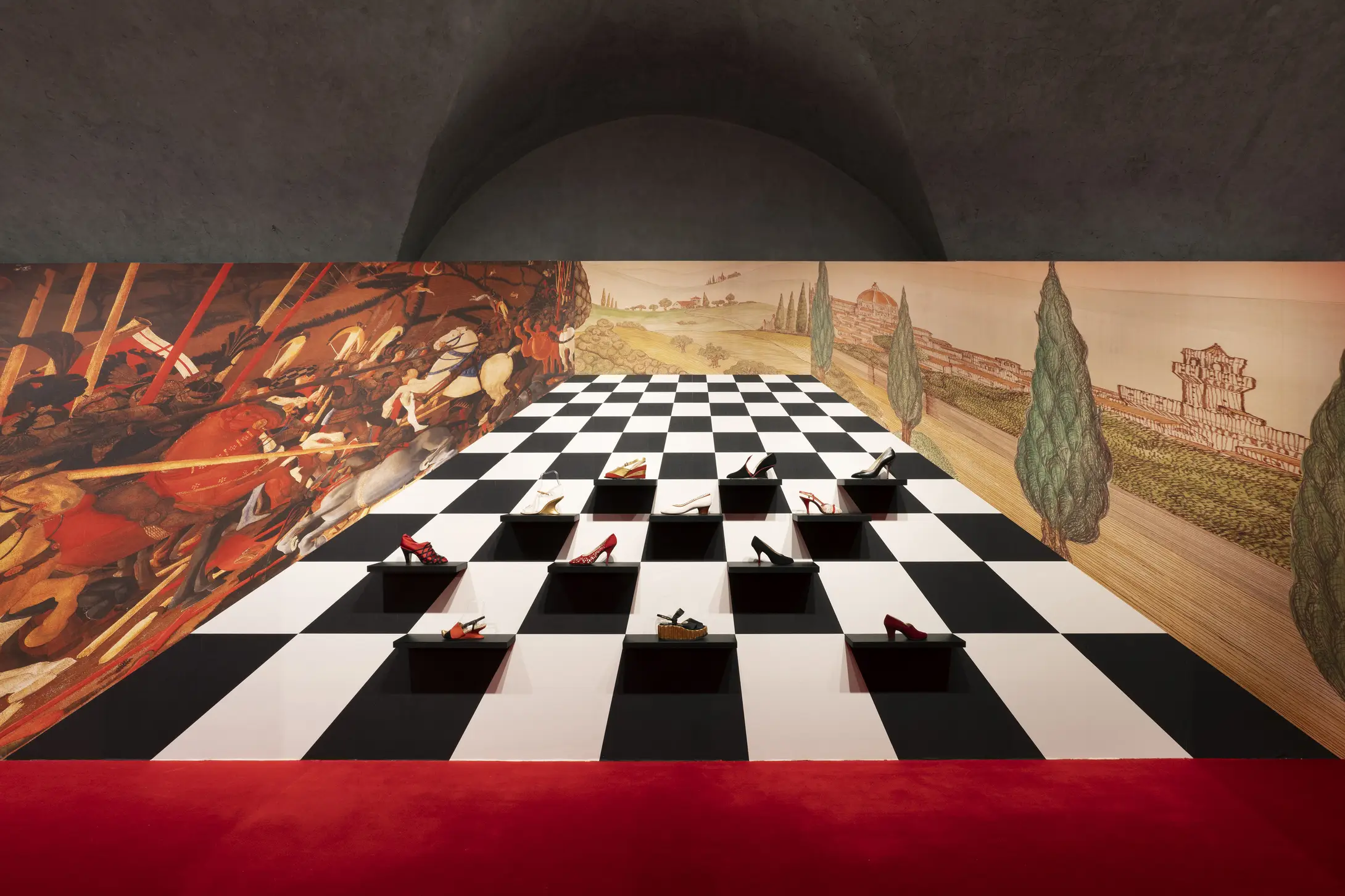
This museum celebrates the life and work of Salvatore Ferragamo, founder of the eponymous maison. The collection features thousands of shoes, garments, photographs, sketches, and historical documents that illustrate the design evolution and craftsmanship of the famous Italian fashion house. In addition to the permanent collection, the museum regularly hosts temporary exhibitions exploring innovation and creativity in the fashion world. - Gucci Galleria
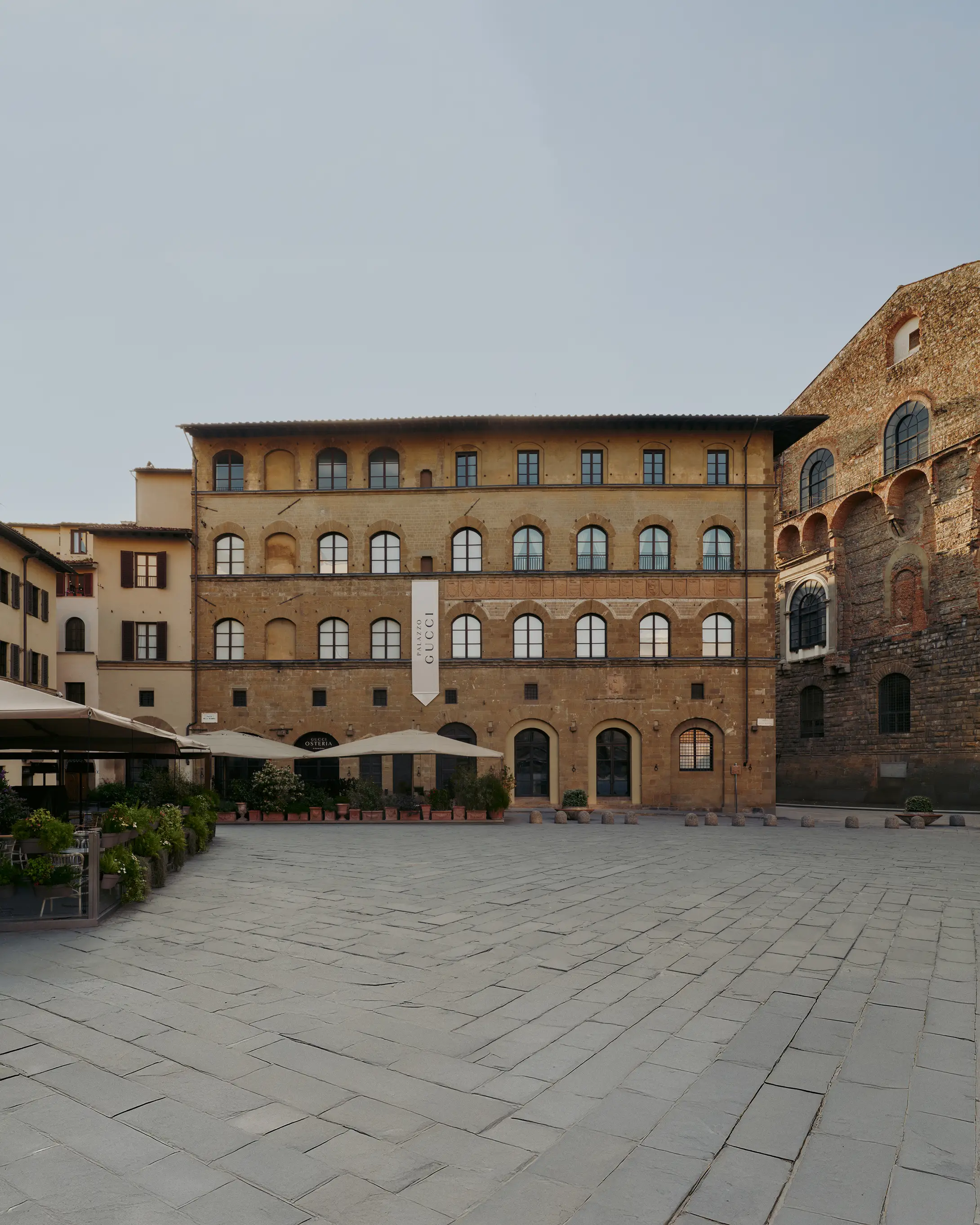
Housed in the ancient Palazzo della Mercanzia in Piazza della Signoria, the Gucci Galleria celebrates the Florentine house's historical archive through iconic advertising campaigns, insights into artisanal techniques, and vintage pieces. Curated by critic Maria Luisa Frisa, the layout offers a journey that blends fashion, design, and cultural heritage.
Textiles and Costume Museums Around Florence
- Stibbert Museum (included in Firenze Card)
While not exclusively a fashion museum, the Stibbert Museum is an eclectic house-museum that preserves remarkable textiles and exotic garments within its vast collection. Alongside armor, weapons, and artworks, the museum displays historic clothing and textile furnishings collected by Frederick Stibbert. - Museum of Straw in Signa
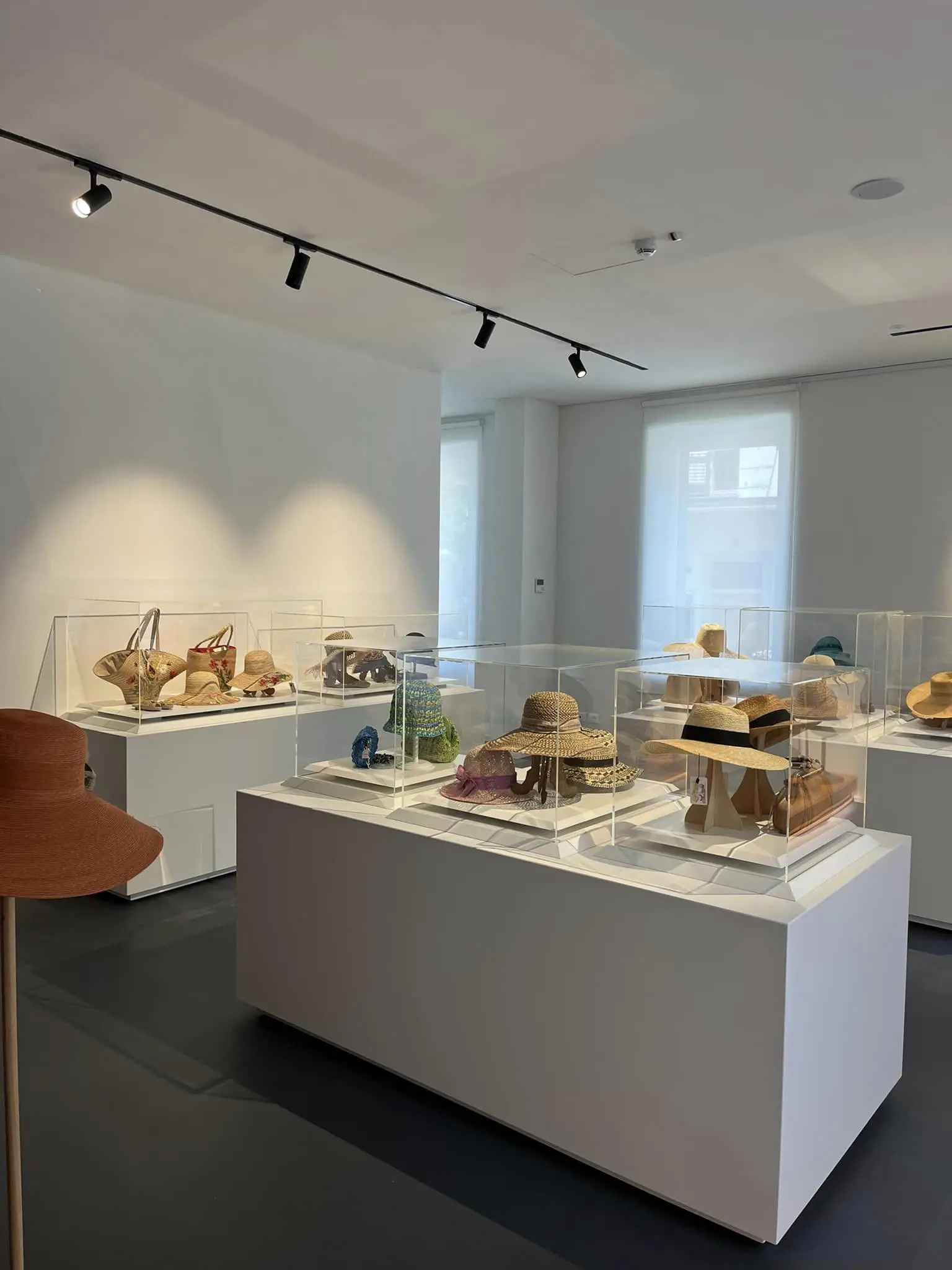
In the early 18th century, Domenico Michelacci began industrial-scale straw production, and until the 1950s, Signa was the heart of the manufacturing of straw hats (the world-famous "Florence straw hat"). This museum documents the history and incredible craftsmanship behind this iconic accessory.
And to learn more about FASHION, you can also visit these pages
Gallerie degli Uffizi
The places
Stages
Museum of Costume and Fashion - Pitti Palace
The Museum of Costume and Fashion in Florence, located inside the Palazzina della Meridiana next to the southern wing of Pitti Palace, is one of the most important Italian institutions dedicated to the history of costume and fashion.
It houses a vast collection of more than 15.000 pieces, with dresses, accessories and historical costumes dating from the 16th century to present days. The recently-renovated museum features 12 new rooms, including the elegant 19th century Ballroom.
Among the numerous exhibitions are the majestic kimono-style housecoat created by Mariano Fortuny for Eleonora Duse, the 1920s “flapper” tunic by Chanel, the sparkling sequin-covered outfit worn by Franca Florio and the flamboyant evening gowns by Elsa Schiaparelli, leading up to the regal luxury of the creations by Emilio Schubert, the tailor of the divas in the 1950s (his garments for Gina Lollobrigida and Sophia Loren are famous).
Additionally, the museum showcases the geometric extravagance of Patty Pravo's dress, designed in the early 1980s by Gianni Versace, the essential sensuality of the black sheath designed by Jean Paul Gaultier and made famous by Madonna, and the dreamy allure of Gianfranco Ferré's collection for Dior in the 1990s.
Each section offers a fascinating journey through the centuries, showcasing masterpieces by great fashion designers that reveal the evolution of style and taste. Displayed in rotation for conservation reasons, the Museum’s collections also include jewelry and accessories from the 18th century to today,
Museo Ferragamo
The Ferragamo Museum was established in 1995 by Ferragamo family, with the aim of introducing the artistic qualities of Salvatore Ferragamo, the founder of the eponymous company, and his innovations in the field of footwear. These innovations have positioned him as one of the major figures in 20th-century design and fashion.
Following the ever-evolving world of fashion, it was decided in 2006 to adopt the approach of changing the exhibition themes annually. Starting from the legacy of Salvatore Ferragamo, his creations, and the values he believed in, these themes aim to blend the past with contemporary elements. This involves integrating art, architecture, design, social history, philosophy, and science into the narrative of the museum.
Palazzo Gucci
Palazzo Gucci is located within the historic Palazzo della Mercanzia, a landmark dating back to 1337 in Florence’s Piazza della Signoria.
The Palazzo serves as the House’s cultural destination, with the exhibition Gucci Storia unfolding across the building’s first and second floors. Through the lens of Artistic Director Demna, Gucci Storia reinterprets the shared destiny of the House and its birthplace, in continuous dialogue with the present. At the core lies the idea of a museum of museums, a sequence of spaces in which distinctive worlds converge. A portrait gallery conjures notions of lineage and identity; a gallery of tapestries highlights a Florentine craft with deep ties to the House; a cabinet of curiosities displays artifacts from its archives; while the savoir-faire and innovation of the House unfold across two rooms, alongside cinematic spaces and interactive oracular installations. Each environment is defined by a distinctive atmosphere and rhythm, guiding visitors through a sequence of spatial and narrative shifts that embody the House’s many identities.
The ground floor hosts a dedicated boutique, alongside Gucci Osteria da Massimo Bottura, with Gucci Giardino — the all-day café and cocktail bar — nearby in the square.
Stibbert Museum
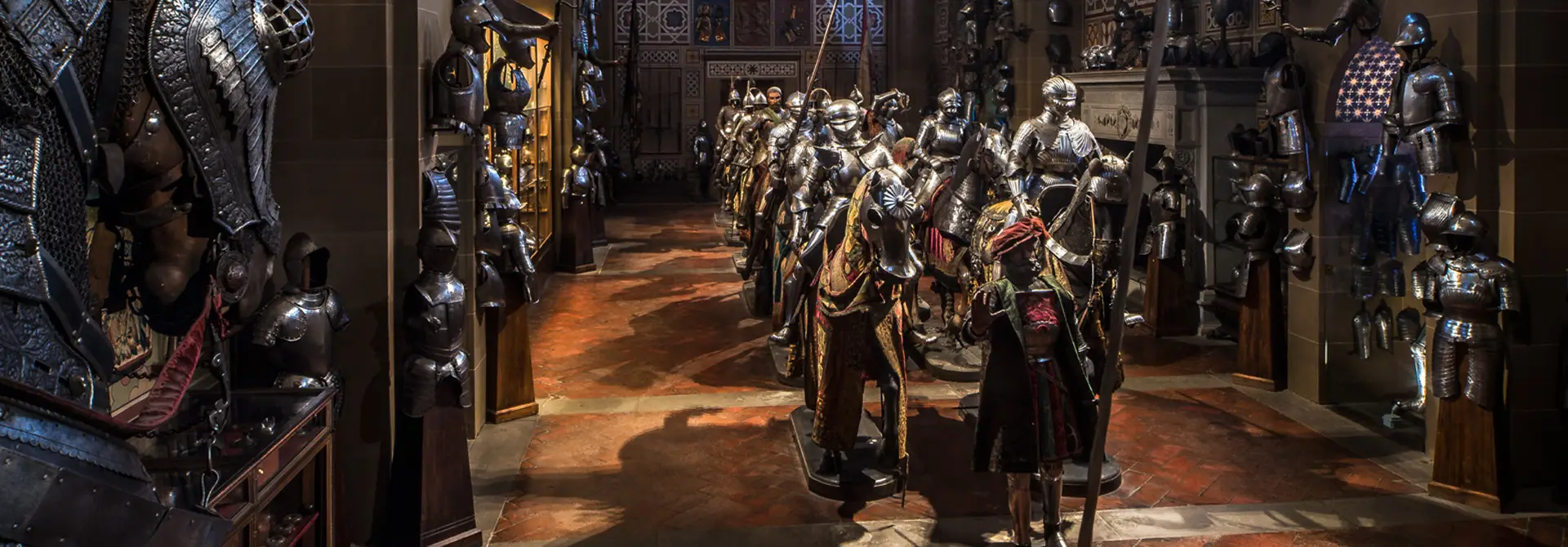
The Stibbert Museum, conceived by Frederick Stibbert (1838-1906), is a rare example of a 19th-century museum: an extraordinary collection of arms, armour and works of art is displayed in a series of rooms whose evocative layout was designed to evoke the atmosphere of the period and the places of origin of the various objects.
The collections include weapons, armour, costumes, objects of furniture and applied art, tapestries and paintings from the 16th to the 19th century, displayed in 60 rooms. The Sala della Cavalcata (the riding hall) is remarkable, where life-size European and Oriental knights are arrayed; the Japanese section includes, in addition to arms and armour, bronzes, costumes, lacquerware: it is one of the most important in the world outside Japan.
The park surrounding the villa, dotted with pavilions, statues, fake ruins and even a small Egyptian temple, reflects Stibbert's adherence to the romantic and eclectic taste typical of his time.
Municipal Straw Museum
At the beginning of the 18th century, Domenico Michelacci started straw production on an industrial scale and until the 1950s Signa became the centre of the manufacture of hats made of this material (the famous 'straw hat of Florence').
The museum, which also hosts temporary exhibitions, brings together straw and woven objects made of different materials, work tools and machines, historical photos and works of art, and a selection of hats from the late 19th century to 1970.
The new museum building, inaugurated on 10 June 2023, has three levels - basement, ground floor and first floor - housing not only straw hats but also various types of straw braids, bags, paintings, equipment and machinery: seven exhibition rooms entirely dedicated to the preservation and enhancement of the history of Signese, which has its roots in straw processing.
The loggia of the main entrance opens onto a completely renovated courtyard with trees, flower boxes and stone benches. At the entrance is a large terracotta sculpture by Bruno Catarzi under a roof of hats hanging from the ceiling.
The first exhibition room on the ground floor, past the bookshop, is dedicated to audiovisuals: in fact, three ceiling-mounted video projectors have been installed for the continuous reproduction of films, photographs, and interviews on the history of the Museum to be watched while sitting on large poufs placed in the centre of the room. In addition to this, there are two rooms to the right for temporary exhibitions of various objects - certainly hats, but also bags and straw garments.
On the upper floor, three rooms are dedicated to the permanent exhibition: various machines are housed in these rooms - among them a 'needling machine', a tool with which, by means of a vertical movement of the needles, the fibre mattress is made compact. In addition there are paintings, candelabra, hats both in the showcases and hanging on the walls, mannequins for the display of clothing and glass vases containing various seeds to be used for educational experiences.
Finally, a 'selfie wall' for taking souvenir photos wearing straw hats provided by the Museum.