A leap back to the Middle Ages
A tour that invites you to imagine Florence before the dawn of the Renaissance. In the Middle Ages, the city looked very different – some traces have been lost, while others remain visible – allowing us to discover the world in which the men and women of that era lived.
Let us therefore imagine a ‘compact’ city, hemmed in by walls and devoid of squares, which only began to expand beyond the perimeter of the old Roman and Carolingian walls thanks to the first municipal enclosure, built between 1173 and 1175. There is the old Cathedral of Santa Reparata and the Baptistery, but no dome rises above them
We follow its expansion with the Gothic cathedrals, the tower houses rising up and joining together, eventually transforming into palaces, alongside the industries springing up along the River Arno.
The political heart of the city, the Palazzo dei Priori, where municipal life takes place, is also a smaller version of what we now admire as the Palazzo Vecchio.
On this tour, we invite you to discover the sites of medieval Florence, to wander through the narrow streets still steeped in its history, and to look up at the towers that still stand as a testament to a Florence that once was and can still be glimpsed today.
Comune di Firenze
The places
Stages
Palazzo Vecchio - Monumental Rooms
Palazzo Vecchio is the city's symbolic monument and, for over seven centuries, the seat of its government; it bears extraordinary testimony to all the salient phases of Florence's history and art. It overlooks, with its imposing bulk, Piazza della Signoria.
The Monumental Quarters form the heart of the museum itinerary and include a series of rooms, starting with the grand Salone dei Cinquecento (with a decoration that celebrates Florence, and in particular the Medici dynasty following the advent of Grand Duke Cosimo I), overlooked by the precious Studiolo di Francesco I.
A little further on is the Sala dei Duecento. On the upper floors one can admire: the Sala dei Gigli, the Sala dell'Udienza, as well as the so-called Quartieri Medicei (Eleonora di Toledo's Quarters and the Quartiere degli Elementi). Also of interest is the Sala del mappamondo (or the Sala del Guardaroba), with ancient geographical maps, and the Cancelleria, which was the office of Niccolò Machiavelli during the first Florentine Republic.
The decorations of the various rooms were made between the 15th and 16th centuries by important artists, including Ghirlandaio, Bronzino, Vasari and his assistans.
Along the museum itinerary are some masterpieces of Renaissance sculpture: Michelangelo's Genius of Victory (Salone dei Cinquecento), Donatello's bronze group of Judith and Holofernes in the Sala dei Gigli, Verrocchio's Puttino (the one in Michelozzo's courtyard, the main entrance to the Palazzo, is a copy).
Another museum tour of Palazzo Vecchio include the Arnolfo Tower, with breathtaking views from the top.
All children who come to Florence should be taken to Palazzo Vecchio. The Mus.e Association organises daily activities for families with children of different age groups, from 4 years upwards, by reservation only. For a fun visit on your own, it is possible to rent a Family Kit (recommended for children from 6 years of age) with a map and other useful items for a visit to the Palazzo or the historical centre under the banner of knowledge, wonder and sharing.

Palazzo Gucci
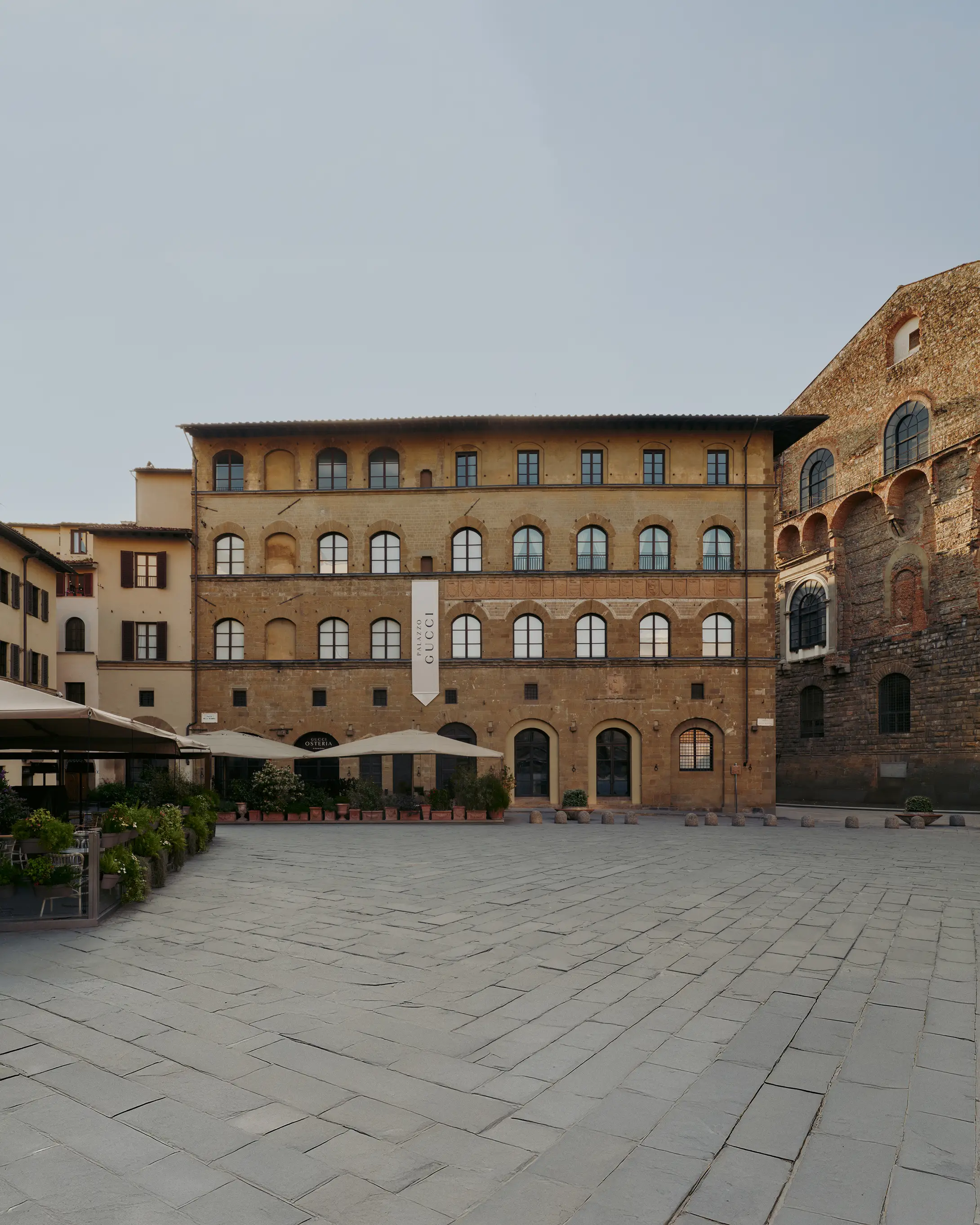
Palazzo Gucci is located within the historic Palazzo della Mercanzia, a landmark dating back to 1337 in Florence’s Piazza della Signoria.
The Palazzo serves as the House’s cultural destination, with the exhibition Gucci Storia unfolding across the building’s first and second floors. Through the lens of Artistic Director Demna, Gucci Storia reinterprets the shared destiny of the House and its birthplace, in continuous dialogue with the present. At the core lies the idea of a museum of museums, a sequence of spaces in which distinctive worlds converge. A portrait gallery conjures notions of lineage and identity; a gallery of tapestries highlights a Florentine craft with deep ties to the House; a cabinet of curiosities displays artifacts from its archives; while the savoir-faire and innovation of the House unfold across two rooms, alongside cinematic spaces and interactive oracular installations. Each environment is defined by a distinctive atmosphere and rhythm, guiding visitors through a sequence of spatial and narrative shifts that embody the House’s many identities.
The ground floor hosts a dedicated boutique, alongside Gucci Osteria da Massimo Bottura, with Gucci Giardino — the all-day café and cocktail bar — nearby in the square.
Bargello National Museum
The Bargello National Museum is a place of extraordinary interest. The evocative medieval building houses a unique collection of Italian sculpture, mainly from the Renaissance period (masterpieces by Donatello, Michelangelo, Verrocchio, Della Robbia), but also from the Mannerist and Baroque periods.
The fascinating Medieval building was built starting in 1255 as the Palazzo del Capitano del Popolo; during the Medici era it became the seat of the Bargello (Chief of the guards who presided over public order) and was later turned into a prison. In the 19th century, following a philological restoration, the palazzo was turned into a museum: the first national museum of the unified state.
On the ground floor, next to the splendid courtyard, is the 16th century hall with a series of sculptures by Michelangelo (Bacchus, Tondo Pitti, Brutus and David-Apollo) and works by Sansovino, Giambologna and Cellini. The 13th-century hall on the first floor houses masterpieces by Donatello, including the David and St George, and sculptors from the early Florentine Renaissance (Luca della Robbia and Desiderio da Settignano); the two versions (by Ghiberti and Brunelleschi) of the Sacrifice of Isaac, made for the competition (1401) for the second door of the Baptistery, are also on display here. On the second floor are Tuscan sculptures from the second half of the 15th century, including Verrocchio's famous Lady with the Mazzolino, as well as works by Rossellino, Pollaiolo and others. A small Baroque masterpiece is the bust of Costanza Bonarelli by Gian Lorenzo Bernini.
The Giottesque fresco cycle in the Cappella del Podestà features one of the oldest portraits of Dante Alighieri. The museum's collections include an important collection (‘Carrand Collection’) of Gothic and Renaissance minor art (ivories, gold, ceramics, weapons, bronzes and medals), as well as a complete panorama of Italian majolica from the 15th century onwards. Also noteworthy are the rooms dedicated to the glazed terracottas of the Della Robbia family and the new Islamic Gallery, recently reorganized with the Majolica Room.

Badia Fiorentina (Santa Maria Assunta)
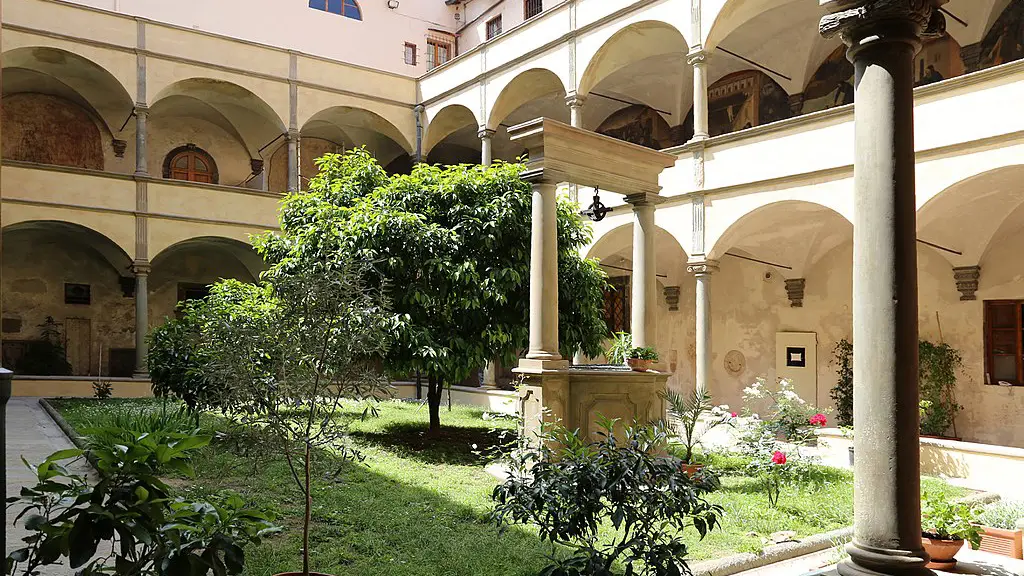
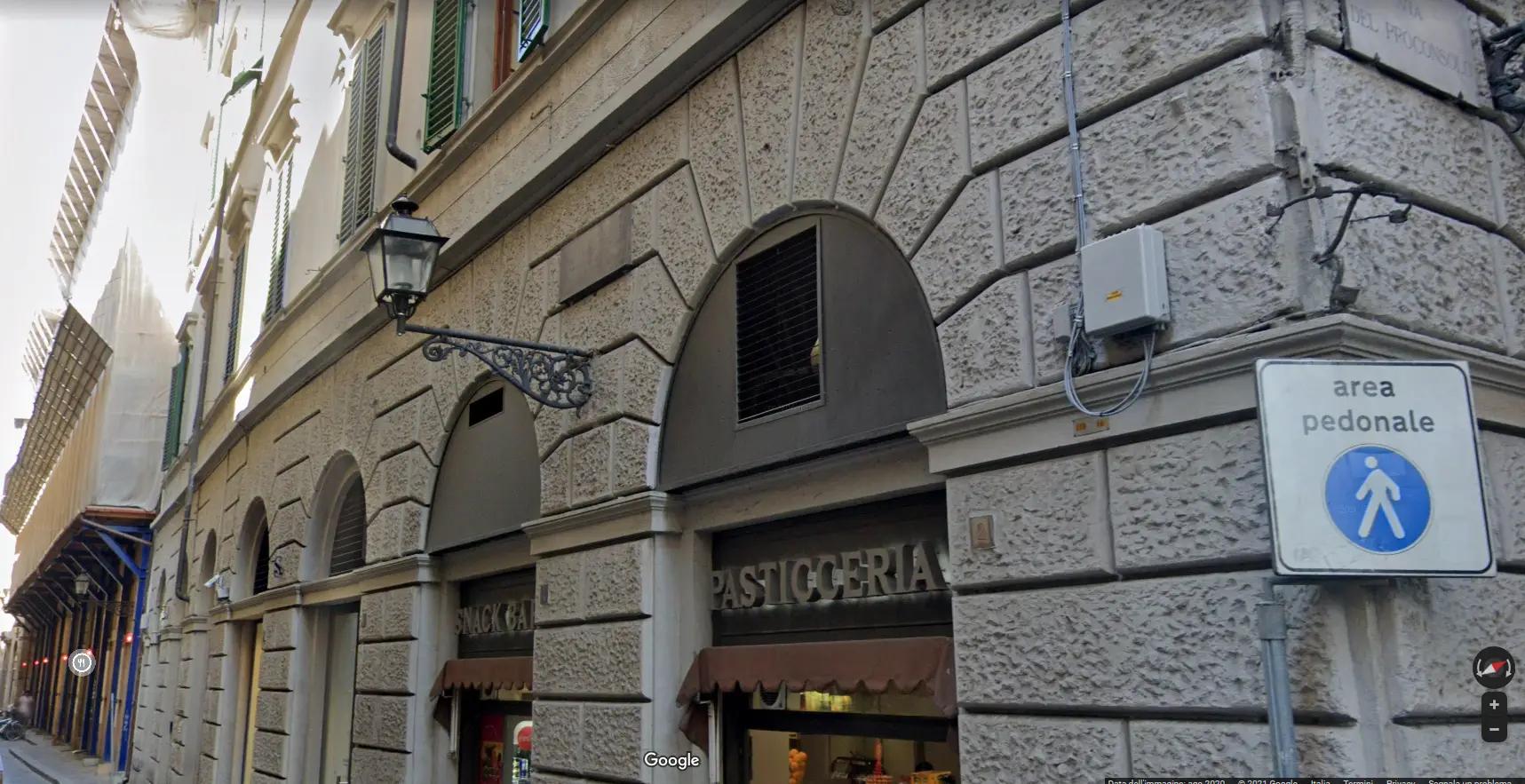
Located in the heart of the ancient city in front of the Bargello, it is the oldest Benedectine monastery in the city. It was founded in 978 by the mother of the Marquis Ugo of Tuscany, Willa. In 1285 the church underwent a radical Gothic-style renovation by Arnolfo di Cambio, who changed its orientation with the apse towards via del Proconsolo. The interior of the church, further transformed in the eighteenth century, presents an overlap of styles and structures; there are valuable works, including the Apparition of the Madonna to San Bernardo, by Filippino Lippi and the funeral monuments to Bernardo Giugni and Ugo di Toscana by Mino da Fiesole.
The Cloister of the Oranges was built around 1435 on a project by Bernardo Rossellino. Upstairs are still visible the frescoes with stories of the Life of San Benedetto, attributed to the "Master of the Orange Cloister".
Casa di Dante Museum
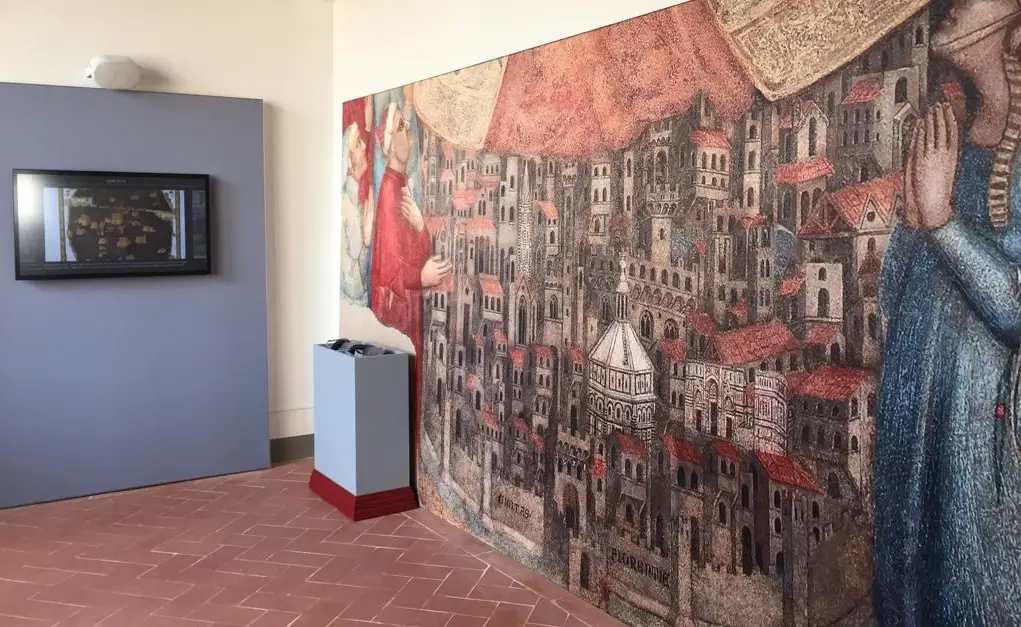
Rebuilt at the beginning of the 20th century on the site of the Alighieri home, the house contains exhibits illustrating life inFlorenceat the time of the greatpoet Dante Alighieri (1265–1321), one of the founders of theItalian language: the Divine Comedy describes an imaginary journey in the after-world through the kingdoms of Inferno, Purgatory and Paradise.
Since June 2020, the museum opened with a brand new technological and multimedia arrangement to offer visitors a more interactive and involving experience of Dante’s House. People will meet Dante, the man, the soldier, the politician, the poet and his beloved Florence. A multisensory experience guided by advanced technologies such as immersive rooms, video mapping and virtual reality. The higher point of the visit is at room 7, where an immersive show - promoted by Comitato Nazionale Dante 2021 MiC - will allow visitors to walk at Dante’s side during his after-world journey.
The museum offers workshops and guided tours for school groups and families with children that allow deepening our knowledge of Dante as a writer, but also as a political figure and a medieval man.
Discover a Dante's itinerary in Florence.
Dante's Plaque: Cerchi's Houses
…LA PORTA, CH'AL PRESENTE È CARCA DI NUOVA FELLONIA, DI TANTO PESO, CHE TOSTO FIA IATTURA DELLA BARCA
DANTE, PARAD., XVI, 94 – 96
…THE GATE THAT IS AT PRESENT LADEN WITH A NEW FELONY OF SO MUCH WEIGHT THAT SOON IT SHALL BE JETSAM FROM THE BARK
Cacciaguida, Dante’s ancestor, describes Florence of his time: it refers in particular to the areaof Porta San Piero, where new inhabitants, coming from the countryside, settled. According to Dante, they somehow corrupted the ancient value system.
The Cerchi family, one of the richest families at that time, bought some houses in the ancient Florence bordering those of the Donati. The conflict between these two families is one of the causes of internal rivalries between white Guelphs and black Guelphs.
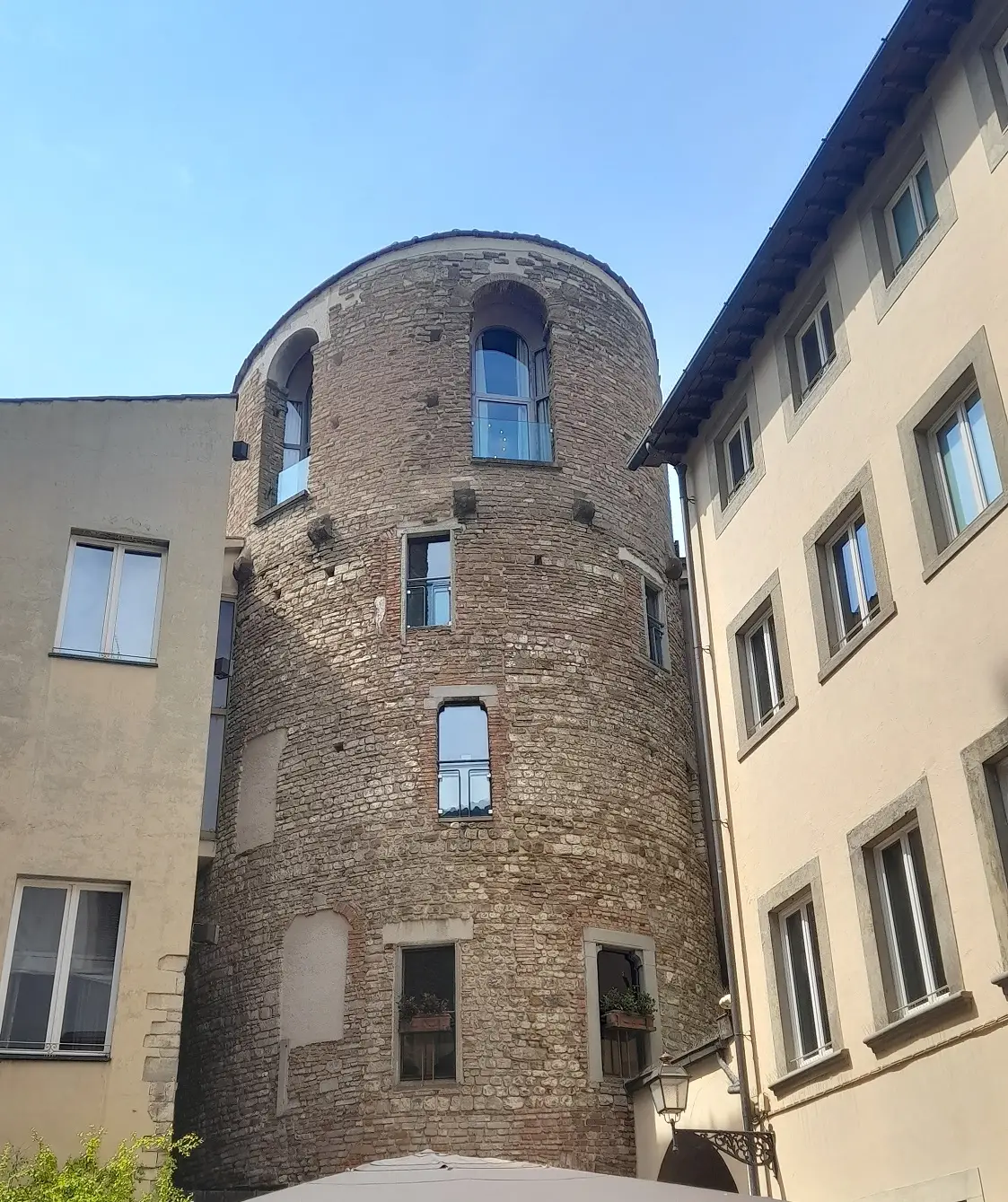
Torre della Pagliazza - Piazza Santa Elisabetta
The Pagliazza Tower is one of the oldest architectures of Medieval Florence and the only tower left with a circular shape.
In the Middle Ages it was a female prison; nowadays it is part of the Hotel Brunelleschi.
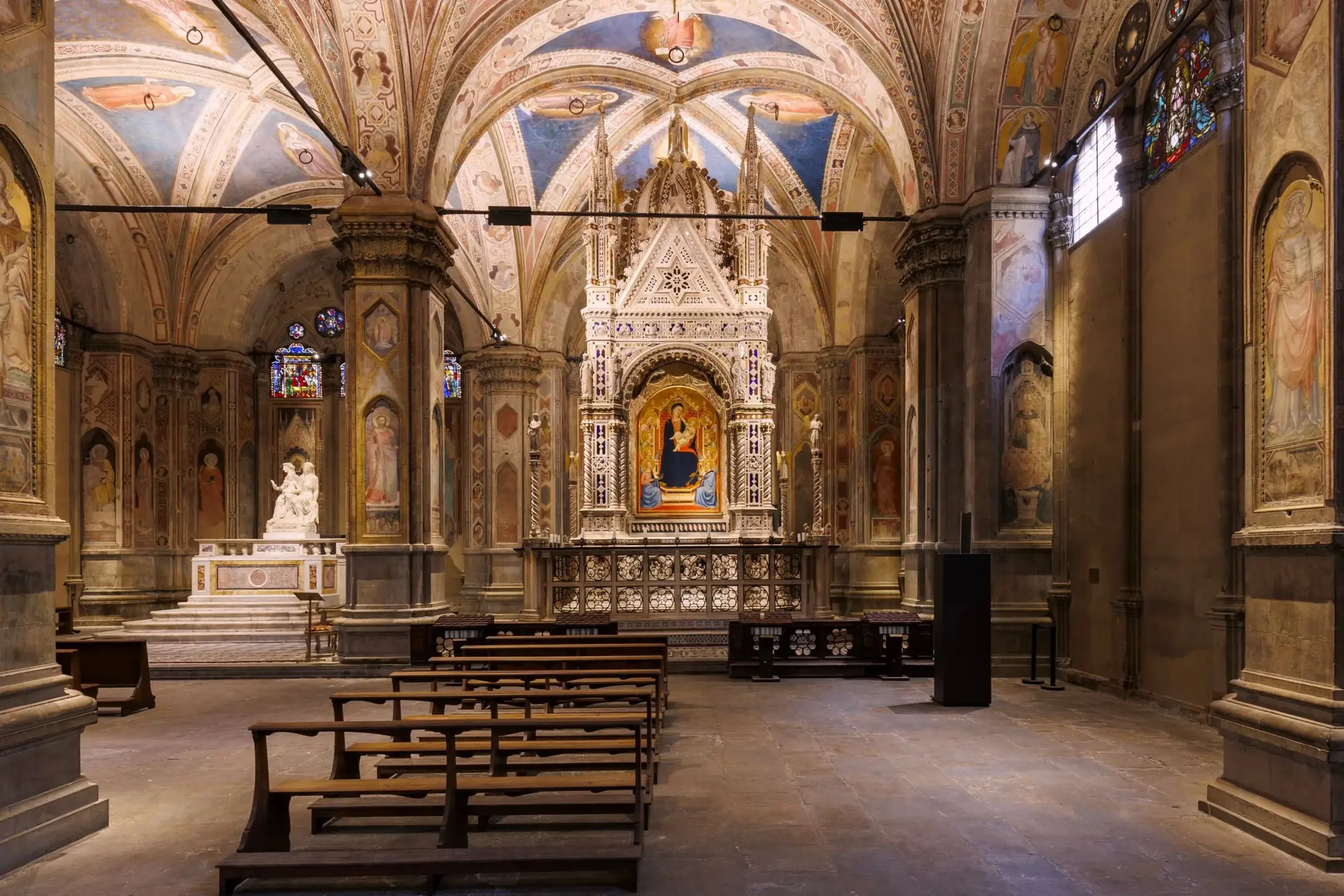
Church and Museum of Orsanmichele
The imposing building, with an unusual shape, along via Calzaioli, was built in 1337 originally as a municipal granary, near a vegetable garden named after San Michele Arcangelo; the loggia on the ground floor was subsequently closed and transformed into a church at the end of the 14th century, decorated inside by the grandiose tabernacle in marble and mosaics, a fourteenth-century work by Andrea Orcagna.
The four sides of the building are characterized by numerous tabernacles, mainly created by medieval arts and crafts guilds: many of the niches contain sculptures depicting their respective patron saints; these are mostly works from the Early Renaissance, among which we admire masterpieces by Donatello, Ghiberti, Verrocchio; most of the originals of these works are in the Orsanmichelemuseum (set up on the top floor of this splendid building) or elsewhere, such as the iconic Donatello's San Giorgio, at the Bargello.
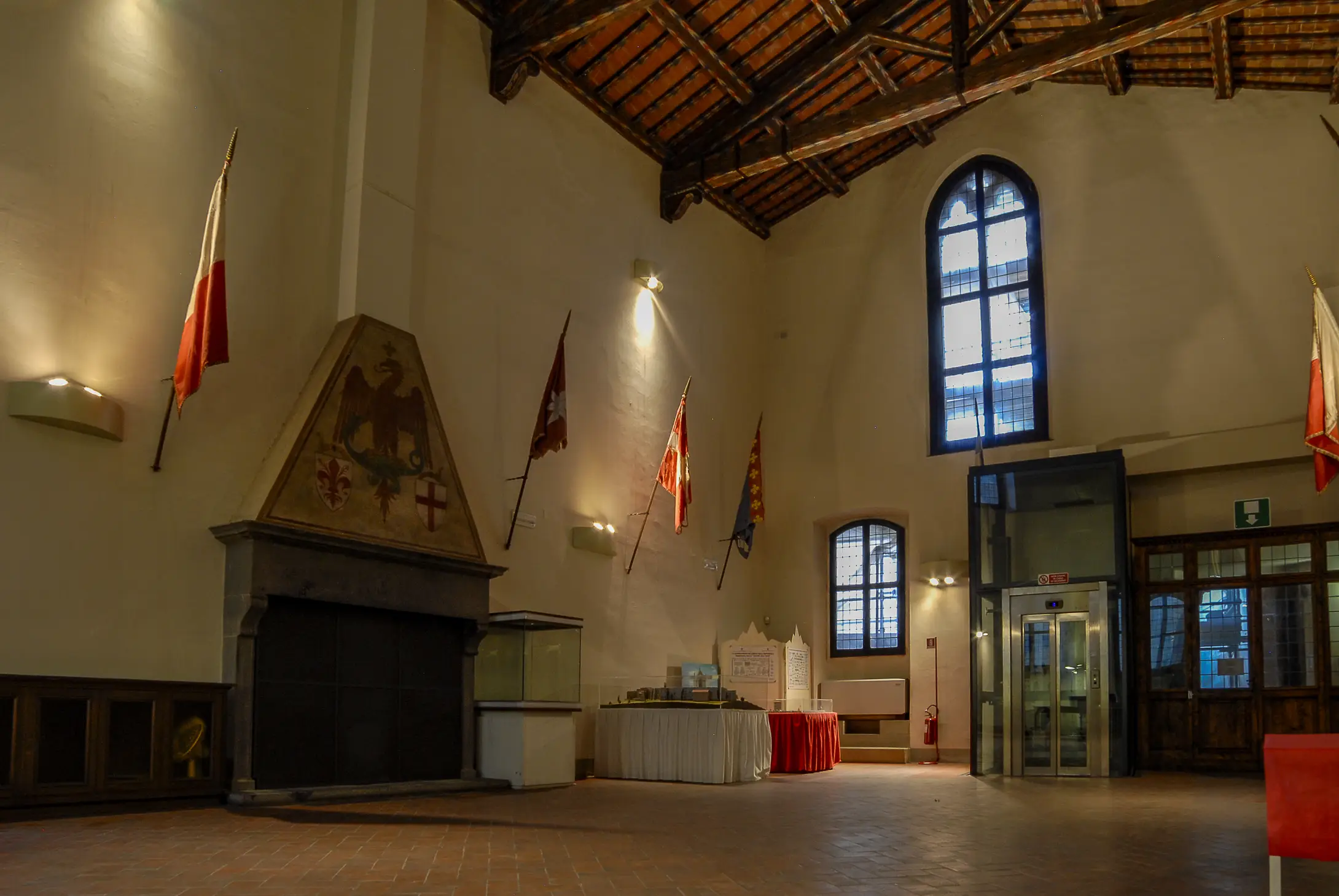
Palagio di Parte Guelfa
The Palagio di Parte Guelfa dates back to the early 14th century in its original form, and was expanded during the 15th century.
Giovanni Villani's Cronica reveals that in 1267, the Parte Guelfa, the dominant faction in the city, did not yet have its own headquarters and held its meetings in the Church of Santa Maria sopra Porta (now home to the Palagio Library).
It was right next to the church that the Captains built the palace where the Magistrates would meet. The palace remained central until the demolition of Florence as capital, which spared it, even though the neo-medieval restoration work was heavy and is the most evident: the large mullioned window on the façade, the square battlements (Guelfa) and the covered staircase.
It also escaped German bombing during World War II and is an important building in Florence's history. Home to Calcio Storico Fiorentino, the halls are made available by the City of Florence for events and conferences.
Museo di Palazzo Davanzati
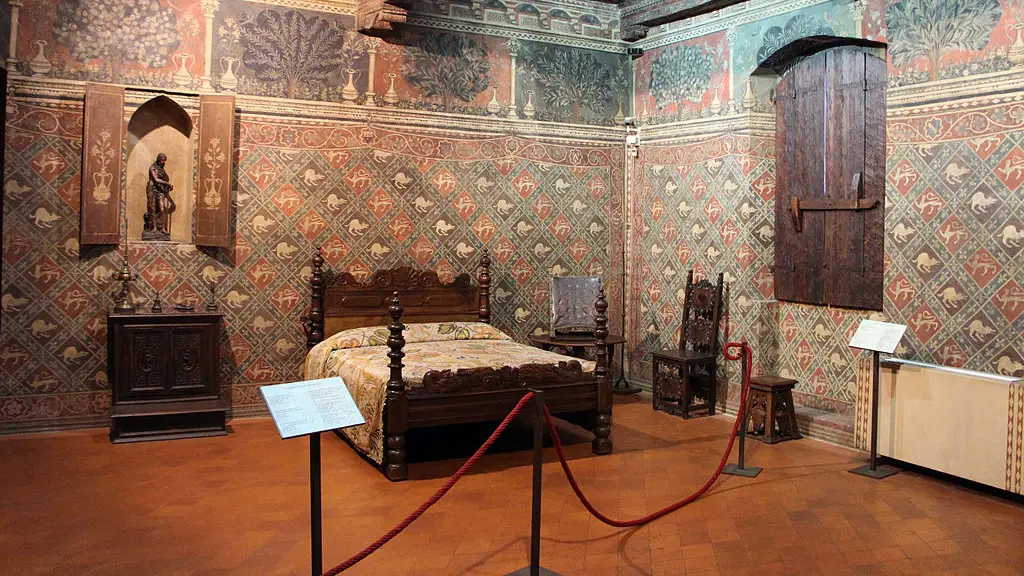
Originally built in the mid-14th century for the Davizzi family and then acquired by the Davanzati in the 15th century, the palace is an extraordinary example of a 14th-century Florentine house, with some interesting interior architecture and mural decorations with geometric motifs that were typical of the age.
Furniture, paintings, tapestries and domestic objects give a good overall picture of what an upper-class Florentine home would have been like between the 14th and 17th centuries; there are also many paintings with secular and religious themes, sculptures and a collection of ceramics and majolicas from various manufactories. There is also one of the richest lace collections in Italy, displayed in a dedicated room on the third floor.